
Neurological conditions can change a person's ability to walk, speak, eat, move, maintain balance or perform everyday activities. Recovery may require much more than medicines or surgery. Neuro rehabilitation is a specialised form of rehabilitation designed to help people regain functional abilities, improve independence and adapt to physical or neurological disabilities following an injury or neurological illness.
Kerala has developed a growing network of rehabilitation services, including dedicated neuro-rehabilitation centres, hospital-based Physical Medicine and Rehabilitation departments and multidisciplinary facilities. These services support patients recovering from conditions such as stroke, traumatic brain injury, spinal cord injury, Parkinson's disease, multiple sclerosis, peripheral nerve disorders and other neurological conditions. Government and private rehabilitation facilities in Kerala offer combinations of physiotherapy, occupational therapy, speech and swallowing therapy, rehabilitation nursing, orthotics and other specialised services.
For patients searching for the best neuro rehabilitation centre in Kerala, however, the most important consideration should not simply be the name or size of a facility. The right centre should have an experienced multidisciplinary team, appropriate rehabilitation technology, structured treatment programmes and the ability to develop a programme around the patient's specific neurological condition and functional goals.
What Is Neuro Rehabilitation?
Neuro rehabilitation, or neurological rehabilitation, is a structured programme of medical and therapeutic care for people whose movement, communication, cognition, swallowing or other functions have been affected by a neurological condition.
The purpose of neuro rehabilitation is not simply to provide physiotherapy. A comprehensive programme may involve a physiatrist or rehabilitation physician, physiotherapist, occupational therapist, speech and language therapist, psychologist, rehabilitation nurse, orthotist and other specialists depending on the patient's needs.
The rehabilitation programme generally begins with an assessment of the patient's current physical and neurological abilities. The team then identifies problems such as muscle weakness, abnormal muscle tone, balance difficulties, impaired coordination, difficulty walking, speech problems, swallowing difficulties or limitations in daily activities.
Treatment is then designed around realistic functional goals. These goals may include improving walking, transferring from a bed to a chair, using the affected arm, communicating more effectively, eating safely, managing personal care or becoming more independent at home.
Who Needs Neuro Rehabilitation?
Neuro rehabilitation can be beneficial for people with a wide range of neurological conditions. The rehabilitation approach differs depending on the diagnosis, severity of impairment, age and stage of recovery.
One of the most common reasons patients undergo neurological rehabilitation is stroke. A stroke can affect movement, balance, speech, swallowing, vision and cognitive abilities. Rehabilitation may begin after the patient's medical condition has stabilised and can continue through inpatient, outpatient and home-based programmes.
Patients recovering from traumatic brain injury may also require neuro rehabilitation. Depending on the severity of the injury, rehabilitation can address mobility, coordination, cognition, communication, behaviour and independence in everyday activities.
Spinal cord injuries can result in significant changes in mobility and sensation. Rehabilitation focuses on maximising remaining function, preventing complications and helping the individual become as independent as possible.
Neuro rehabilitation can also be used for patients with Parkinson's disease, multiple sclerosis, peripheral neuropathy, motor neuron disorders, movement disorders, cerebral palsy and other neurological conditions. Rehabilitation centres in Kerala provide services for several of these conditions through specialised programmes.
Neuro Rehabilitation After Stroke
Stroke rehabilitation is one of the most important areas of neurological rehabilitation.
A stroke may result in weakness or paralysis on one side of the body, difficulty walking, loss of hand function, speech and language problems, swallowing difficulties, balance problems and cognitive changes.
The rehabilitation process is therefore highly individualised. A patient with mild weakness may need a different programme from someone with severe paralysis or significant communication difficulties.
Physiotherapy may focus on strengthening, balance, mobility, gait training and functional movement. Occupational therapy can help patients regain the ability to perform activities such as dressing, bathing, eating and using their hands. Speech and swallowing therapy may be required when communication or swallowing has been affected.
Some rehabilitation centres also use technology-assisted rehabilitation, including robotic systems and other equipment designed to support repetitive and task-specific movement training. Current rehabilitation technology can provide structured repetitive movements and objective information that therapists can use to monitor progress, while remaining part of a therapist-led rehabilitation programme.
Brain Injury Rehabilitation
Traumatic brain injury can affect different aspects of physical and cognitive function depending on the location and severity of the injury.
Some patients may experience problems with balance, coordination, movement or speech, while others may experience memory problems, difficulty concentrating, behavioural changes or challenges with everyday activities.
A comprehensive brain injury rehabilitation programme in Kerala may therefore include physical therapy, occupational therapy, speech and language therapy, cognitive rehabilitation and psychological support.
The objective is to help the patient recover as much function as possible while developing strategies to manage any remaining difficulties.
Spinal Cord Injury Rehabilitation
Spinal cord injury rehabilitation requires specialised and long-term care.
Depending on the level and severity of the spinal cord injury, patients may experience partial or complete loss of movement and sensation. Rehabilitation may focus on strengthening unaffected muscles, improving transfers and mobility, wheelchair skills, gait training where appropriate, preventing pressure injuries and managing other complications.
A comprehensive spinal cord rehabilitation programme can also include occupational therapy, bladder and bowel management, respiratory care, orthotic support, psychological counselling and education for patients and caregivers.
Kerala has dedicated rehabilitation services for spinal cord injuries, although the availability of beds and specialised facilities can vary between centres.
What Treatments Are Available at a Neuro Rehabilitation Centre?
A good neuro rehabilitation programme is usually multidisciplinary rather than relying on one form of therapy.
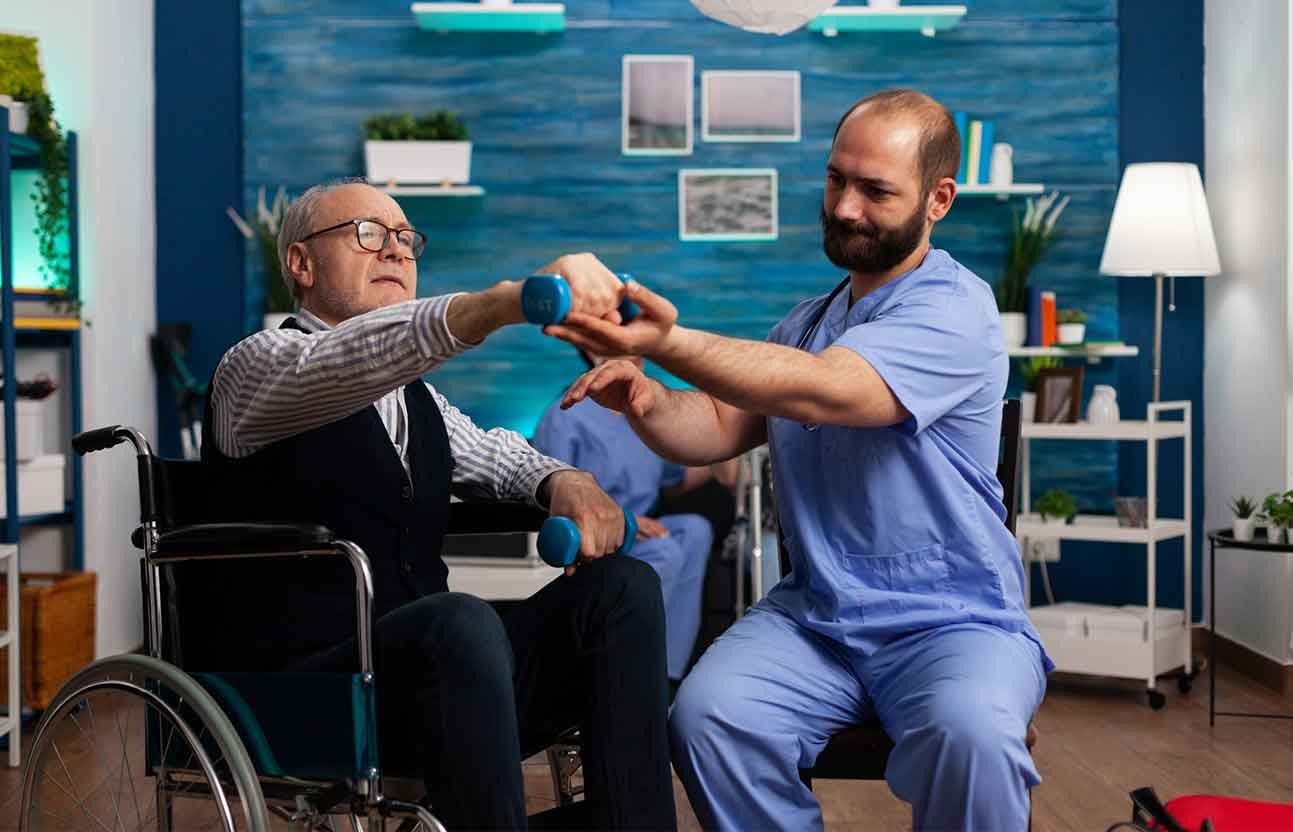
Physiotherapy is often the central component of neurological rehabilitation. Depending on the patient's condition, treatment can include strengthening exercises, balance training, gait training, mobility exercises, coordination exercises, posture correction and task-specific movement practice.
Occupational therapy focuses on helping patients regain independence in everyday activities. Therapists may work on hand function, self-care, home activities and adaptations that make daily living safer and easier.
Speech and language therapy is important for patients experiencing difficulties with speech, language, communication or swallowing following stroke, brain injury or other neurological conditions.
Swallowing rehabilitation can be particularly important for patients with dysphagia because swallowing difficulties may increase the risk of aspiration and nutritional problems.
Spasticity management may also form part of neuro rehabilitation. Some patients develop abnormal muscle stiffness following neurological injury. Specialist rehabilitation teams may use medicines, injections and other interventions when clinically appropriate. Comprehensive rehabilitation services in Kerala include spasticity management alongside physical and occupational therapy.
Orthotic and prosthetic services can assist patients who require braces or other devices to support movement, positioning or mobility.
Technology-Assisted Neuro Rehabilitation
Modern neuro rehabilitation is increasingly incorporating technology to complement conventional therapy.
Robotic rehabilitation systems, gait-training equipment, movement sensors and computer-assisted exercises can provide repetitive and structured training for selected patients.
Robotic technology can be particularly useful when patients require a high number of repetitions during gait or limb rehabilitation. However, technology should not replace clinical assessment or therapist interaction.
The appropriate technology depends on the patient's diagnosis, physical abilities, rehabilitation goals and stage of recovery. The most effective approach is generally one where technology is incorporated into a broader, personalised rehabilitation programme rather than used as a standalone treatment.
How Long Does Neuro Rehabilitation Take?
There is no fixed duration for neuro rehabilitation.
Some patients may experience meaningful improvement within weeks, while others require several months or longer. Recovery depends on factors such as the neurological diagnosis, severity of injury, age, general health, time since onset and consistency of rehabilitation.
Stroke rehabilitation, for example, can continue long after hospital discharge. Patients may progress from intensive inpatient rehabilitation to outpatient therapy and eventually home-based rehabilitation.
The rehabilitation programme should therefore be regularly reviewed and adjusted according to functional progress.
Why Early Neuro Rehabilitation Is Important
Starting appropriate rehabilitation as soon as the patient's medical condition allows can be an important part of neurological recovery.
Early rehabilitation can help patients begin working on mobility, positioning, balance, communication and daily activities while also helping healthcare professionals identify complications and functional limitations.
However, "early" does not mean that rehabilitation becomes unnecessary after the first few weeks or months. Neurological recovery can continue for a long period, and patients may benefit from rehabilitation at different stages of their recovery.
The appropriate timing and intensity should always be determined by the treating medical and rehabilitation team.
Choosing the Best Neuro Rehabilitation Centre in Kerala
When searching for the best neuro rehabilitation centre in Kerala, patients and families should look beyond advertisements and consider the clinical services available.
A strong neuro rehabilitation centre should have access to appropriately qualified rehabilitation professionals and should be capable of providing an individualised treatment programme.
The availability of physiatrists, neurologists, physiotherapists, occupational therapists, speech therapists, rehabilitation nurses and other specialists can be important depending on the patient's condition.
Patients should also ask whether the centre provides inpatient and outpatient rehabilitation, how frequently therapy is provided, whether treatment plans are reviewed regularly and whether caregivers are trained to continue appropriate activities at home.
For patients with complex neurological conditions, access to diagnostic services, neurology, neurosurgery, emergency care and other medical specialties can also be valuable.
Neuro Rehabilitation in Kerala, India
Kerala has rehabilitation services distributed across different regions of the state. Major hospitals and specialised rehabilitation facilities provide neurological rehabilitation for both local and international patients.
Government Medical College, Thiruvananthapuram's Physical Medicine and Rehabilitation department, for example, provides outpatient and inpatient rehabilitation and treats neurological cases across different age groups. Its services include physiotherapy, occupational therapy, orthotics, prosthetics, rehabilitation nursing and social rehabilitation, along with dedicated clinics including stroke and cerebral palsy services.
Other hospitals in Kerala also provide multidisciplinary neuro rehabilitation. Services may include rehabilitation for stroke, spinal cord injury, traumatic brain injury, Parkinson's disease, multiple sclerosis, peripheral neuropathy and other neurological conditions.
This growing rehabilitation infrastructure makes Kerala, India an option for patients who require structured neurological recovery and long-term rehabilitation support.
Neuro Rehabilitation in Kochi, Kerala
Kochi is one of the major healthcare destinations in Kerala and offers access to specialised neurological and rehabilitation services.
Patients searching for neuro rehabilitation in Kochi, Kerala can find both dedicated rehabilitation centres and multidisciplinary hospitals where rehabilitation is integrated with neurology, neurosurgery and other medical services.
For complex cases, having neurological assessment and rehabilitation services within the same healthcare ecosystem can be useful.
For example, multidisciplinary Physical Medicine and Rehabilitation services in Kochi can include rehabilitation for spinal cord injuries, stroke, traumatic brain injury, peripheral neuropathies, nerve injuries, Parkinson's disease, movement disorders and multiple sclerosis.
Kochi can therefore be considered by patients who require a combination of specialist medical care and structured rehabilitation.
Neuro Rehabilitation in Calicut and Northern Kerala
Patients from northern Kerala can also access neurological rehabilitation services in and around Calicut (Kozhikode).
Rehabilitation facilities in the region provide services for neurological and physical conditions, while some centres focus specifically on neuro rehabilitation and physiotherapy.
This can be particularly useful for patients who prefer to continue long-term rehabilitation closer to their home rather than travelling repeatedly to another part of Kerala.
The choice between a specialised standalone rehabilitation centre and a hospital-based programme should depend on the patient's medical complexity and rehabilitation requirements.
Neuro Rehabilitation for International Patients
Kerala is also an option for international patients seeking rehabilitation following stroke, brain injury, spinal cord injury or other neurological conditions.
For patients travelling from the GCC and other international markets, the rehabilitation process requires additional planning. Medical reports, imaging, discharge summaries and previous therapy records should ideally be reviewed before travel.
The rehabilitation team can then assess the patient's current functional status and determine whether inpatient or outpatient rehabilitation is appropriate.
For international patients, factors such as accommodation, accessibility, caregiver support, duration of stay, transportation and follow-up rehabilitation after returning home should also be considered.
What Makes a Neuro Rehabilitation Programme Effective?
The effectiveness of neuro rehabilitation depends on much more than the number of therapy sessions.
A personalised treatment plan is important because neurological conditions affect people differently. Two patients with the same diagnosis may have completely different levels of mobility, communication, cognition and independence.
Goal-oriented therapy allows the rehabilitation team to focus on meaningful outcomes. For one patient, the goal may be walking independently. For another, it may be transferring safely from a wheelchair to a bed or regaining enough hand function to eat independently.
Regular assessment is also important because rehabilitation goals should change as the patient's abilities improve.
Family and caregiver involvement can further support recovery. Caregivers may need to learn safe transfer techniques, positioning, exercises and strategies for supporting the patient's independence at home.
The Importance of a Multidisciplinary Approach
Neurological rehabilitation often involves several different aspects of recovery simultaneously.
A patient may require physiotherapy for mobility, occupational therapy for daily activities and speech therapy for communication or swallowing. Some patients may also require psychological support, orthotic services, nutritional guidance or specialist medical management.
A multidisciplinary approach allows these different areas to be addressed as part of a coordinated rehabilitation plan.
Several rehabilitation facilities in Kerala describe multidisciplinary teams incorporating medical rehabilitation, physiotherapy, occupational therapy, speech and swallowing therapy and other specialist services.
Medinglo and Neuro Rehabilitation in Kerala
For patients travelling to India for neurological rehabilitation, choosing the appropriate centre and arranging treatment can be challenging, particularly when the patient and family are unfamiliar with the healthcare system.
Medinglo can assist international patients in exploring suitable neuro rehabilitation centres in Kerala, coordinating medical consultations and helping organise the broader medical travel process.
The patient's medical reports can be shared with the appropriate rehabilitation team for assessment before travel. Based on the medical condition and functional requirements, the rehabilitation provider can determine the appropriate programme.
The objective is to help patients and families make an informed decision based on their medical needs rather than simply choosing a centre based on online rankings or promotional claims.
Frequently Asked Questions About Neuro Rehabilitation in Kerala
What is neuro rehabilitation?
Neuro rehabilitation is a specialised rehabilitation programme designed to help people recover or maximise function after neurological conditions such as stroke, brain injury, spinal cord injury, Parkinson's disease and other disorders affecting the nervous system.
Which conditions can be treated with neuro rehabilitation?
Neuro rehabilitation can support patients with stroke, traumatic brain injury, spinal cord injury, Parkinson's disease, multiple sclerosis, peripheral neuropathy, cerebral palsy, movement disorders and other neurological conditions.
How long does neuro rehabilitation take?
The duration varies according to the patient's diagnosis, severity and rehabilitation goals. Some patients may require weeks of intensive therapy, while others may benefit from rehabilitation for several months or longer.
Is neuro rehabilitation only physiotherapy?
No. Comprehensive neurological rehabilitation can include physiotherapy, occupational therapy, speech and language therapy, swallowing therapy, rehabilitation nursing, psychological support, orthotics and medical management depending on the patient's needs.
Is Kerala good for neuro rehabilitation?
Kerala has a growing network of hospital-based and dedicated rehabilitation facilities offering neurological rehabilitation services. The state has services covering stroke, spinal cord injury, traumatic brain injury and several other neurological conditions.
Which city in Kerala is best for neuro rehabilitation?
There is no single city that is best for every patient. Kochi, Thiruvananthapuram, Kozhikode, Thrissur and other parts of Kerala have rehabilitation facilities. The best location depends on the patient's diagnosis, complexity, required services and duration of rehabilitation.
Conclusion
Finding the best neuro rehabilitation centre in Kerala should begin with understanding the patient's neurological condition and rehabilitation goals.
Kerala, India offers a growing range of neurological rehabilitation services, from hospital-based Physical Medicine and Rehabilitation departments to dedicated neuro rehabilitation centres. Patients can access physiotherapy, occupational therapy, speech and swallowing therapy, rehabilitation nursing, orthotic services and, in selected centres, technology-assisted rehabilitation.
For stroke survivors, patients recovering from brain or spinal cord injuries and people living with chronic neurological disorders, a structured and personalised rehabilitation programme can play an important role in improving mobility, independence and quality of life.
For patients from India and overseas considering neuro rehabilitation in Kerala, the most important step is to obtain a professional assessment and select a centre whose clinical team, facilities and rehabilitation programme match the patient's specific needs.
Medical Disclaimer: This article is intended for general educational purposes only and should not be considered medical advice. Rehabilitation outcomes vary from person to person. Patients should consult a qualified rehabilitation physician, neurologist or appropriate healthcare professional before starting or changing a rehabilitation programme.