



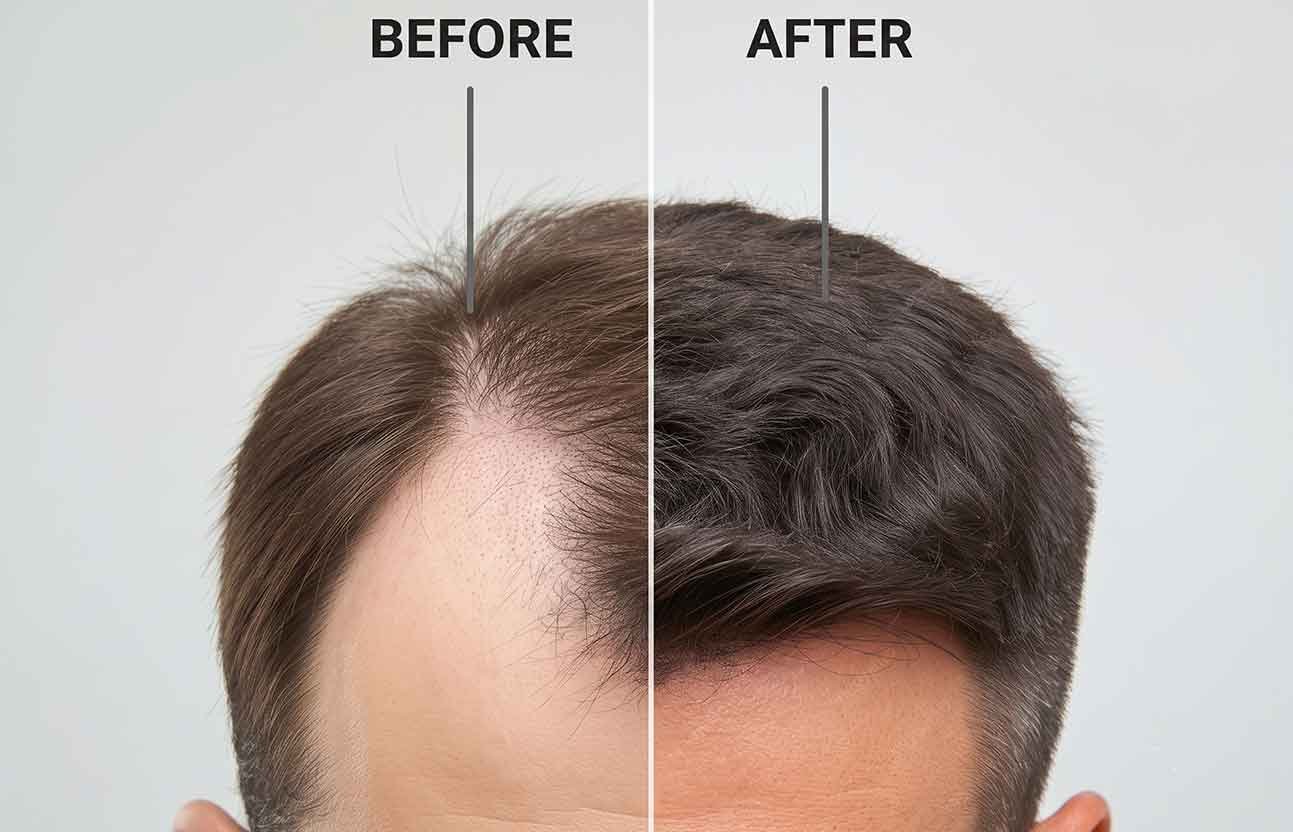
Hair loss is a common concern among men and women, and for many people, it can affect confidence, appearance and quality of life. As hair restoration technology has developed, hair transplant surgery has become an increasingly popular option for people looking for a long-term solution to permanent hair loss.
For patients from the United Arab Emirates, Saudi Arabia, Qatar, Oman, Kuwait and Bahrain, Turkey has traditionally been one of the most recognised destinations for affordable hair transplantation. Istanbul, in particular, has developed a strong international reputation for FUE and DHI procedures and attracts patients from around the world.
However, Turkey is not the only destination worth considering.
Kerala, India is emerging as an attractive alternative for GCC patients seeking hair transplant treatment, combining experienced medical professionals, modern hospitals and clinics, advanced hair restoration techniques, competitive treatment costs and the broader healthcare infrastructure of India.
The important point is not simply whether Kerala is cheaper than Turkey. Hair transplantation is a surgical procedure, and the quality of the surgeon, donor-hair planning, hygiene standards, graft handling, treatment technique and long-term follow-up can have a much greater impact on the final result than the advertised package price.
This guide explains why GCC patients may consider hair transplant in Kerala, India, what techniques are available, how costs work, what recovery involves and how Kerala can be compared with established destinations such as Turkey.
Why Are GCC Patients Travelling Abroad for Hair Transplant Treatment?
Hair restoration has become increasingly accessible through medical tourism. Patients from the GCC often compare treatment options across countries because private healthcare costs, availability of specialist procedures and treatment packages can vary significantly.
The popularity of Turkey has demonstrated the demand for international hair restoration. Turkish clinics are well known for international patient packages, often combining surgery with accommodation, airport transfers and patient coordination.
At the same time, international patients are increasingly looking beyond a single destination. India has a large healthcare sector, experienced dermatologists and plastic surgeons, modern hospitals and a well-established medical tourism ecosystem.
For GCC patients, India can offer another option where the decision can be based on medical expertise, treatment value, accessibility, aftercare and personalised care, rather than simply choosing the most heavily advertised destination.
Why Consider Kerala, India for a Hair Transplant?
Kerala has long been recognised for healthcare, wellness and international medical travel. The state has a network of hospitals and specialised clinics, particularly in cities such as Kochi, Thiruvananthapuram, Kozhikode and Thrissur.
Hair restoration is part of the wider dermatology and cosmetic surgery sector, and suitable patients may have access to techniques such as Follicular Unit Extraction (FUE) and Direct Hair Implantation (DHI), depending on the centre and surgeon.
One of Kerala's important advantages is that patients can potentially combine specialised medical care with a comfortable recovery environment. Kerala has established hospitality infrastructure, international connectivity through airports and experience in receiving visitors from the GCC.
For patients from the UAE, Saudi Arabia, Qatar, Oman, Kuwait and Bahrain, this can make Kerala an option worth researching before deciding where to undergo hair transplant surgery.
Hair Transplant in Kerala vs Turkey: What Should Patients Compare?
The comparison between hair transplant in Kerala and Turkey should not be based only on the headline price.
Turkey has a highly developed medical tourism market and has become particularly famous for high-volume hair transplant procedures. Some Turkish clinics offer comprehensive packages that include accommodation, transfers and other services.
India, meanwhile, generally has a wider variation in pricing and clinic models. Some centres offer individualised, surgeon-led treatment, while others operate on a high-volume model.
Therefore, patients should compare the actual medical service being provided.
The most important questions are: Who will perform the procedure? How involved will the qualified doctor be? How many grafts are genuinely required? How will the donor area be protected? What technique is recommended? What happens if additional treatment is required? And who will provide follow-up care after the patient returns home?
A lower package price does not automatically mean better value, and a higher price does not automatically guarantee better results.
Hair Transplant Cost in Kerala, India
One of the major reasons international patients explore hair transplant cost in India is the country's competitive healthcare pricing.
Current published market comparisons show that Indian hair transplant procedures can often be priced below comparable treatment in Turkey, although prices vary substantially according to the surgeon, clinic, technique and number of grafts required. Published 2026 estimates for India commonly place treatment somewhere around ₹80,000–₹3,50,000 for many procedures, but these figures should be treated as broad market ranges rather than a fixed quotation.
The final cost of a hair transplant in Kerala depends on factors such as the extent of hair loss, number of grafts, FUE or DHI technique, surgeon's experience, facility, anaesthesia, medications and post-operative care.
Patients should therefore avoid choosing a clinic solely because it advertises the lowest price.
A transparent quotation should clearly explain what is included in the treatment and whether consultation, medications, follow-up, PRP or other services are charged separately.
FUE Hair Transplant in Kerala
Follicular Unit Extraction, commonly known as FUE, is one of the most widely used modern hair transplant techniques.
During FUE, individual follicular units are extracted from the donor area, usually at the back or sides of the scalp, and transplanted into carefully prepared recipient areas.
The advantage of this approach is that it does not involve removing a long strip of scalp, as happens with traditional FUT surgery.
The success of FUE depends heavily on careful graft extraction, preservation of follicles, appropriate implantation and natural hairline design. Excessive extraction from the donor area can create thinning or an unnatural appearance, which is why proper planning is essential.
FUE is available in many hair restoration centres in India, including suitable centres in Kerala.
DHI Hair Transplant in Kerala
Direct Hair Implantation (DHI) is another hair restoration technique available in selected centres.
DHI generally uses a specialised implanter device to place extracted hair follicles into the recipient area. The technique may provide the surgeon with control over implantation angle, direction and placement.
However, DHI is not automatically better than FUE for every patient.
The correct technique depends on the patient's hair loss pattern, donor supply, scalp condition, hair characteristics, desired density and the surgeon's treatment plan.
A qualified hair transplant specialist should assess the patient before recommending FUE, DHI or another approach.
The Importance of Choosing the Right Surgeon
A hair transplant is not simply a procedure of "moving hair from one place to another." It requires careful medical and aesthetic planning.
The surgeon needs to assess the current degree of hair loss, donor density, hair calibre, future hair-loss pattern and the patient's expectations.
One of the most important aspects is designing a natural hairline. Creating an excessively low or dense hairline may consume a large amount of the patient's limited donor supply.
A good treatment plan therefore considers not only how the patient looks immediately after surgery, but also how the hair may develop over the next five, ten or more years.
This is one of the reasons patients should investigate the doctor's qualifications, experience, involvement in surgery and previous results rather than choosing a clinic based only on online advertisements.
Hair Transplant Success Rate: What Patients Should Know
Patients frequently search for the hair transplant success rate in India or ask whether a particular clinic can guarantee a specific percentage.
There is no universal success rate that applies to every patient or every clinic.
Hair transplant outcomes depend on multiple factors, including the patient's health, donor-hair quality, graft survival, surgical technique, graft handling, post-operative care and the progression of underlying hair loss.
A responsible clinic should therefore avoid guaranteeing a specific result for every patient.
Instead, patients should ask to see appropriate before-and-after cases, understand realistic expectations and discuss what happens if some areas require additional treatment.
The goal should be natural, sustainable hair restoration, rather than simply achieving the highest possible number of grafts.
Why Donor Hair Management Matters
Every patient has a limited supply of donor hair.
This means that a hair transplant should be planned as a long-term restoration strategy rather than a one-time cosmetic procedure.
Overharvesting the donor area can permanently reduce the available supply of follicles for future procedures.
A qualified surgeon should therefore assess the donor area carefully and determine how many grafts can safely be extracted.
For younger patients with progressive male or female pattern hair loss, long-term planning becomes particularly important.
Hair Transplant Recovery and Aftercare
Hair transplant recovery is usually gradual.
Immediately after surgery, patients may experience redness, swelling, mild discomfort or small crusts around the transplanted follicles. These effects generally improve as the scalp heals.
The transplanted hairs may initially shed during the early post-operative period. This is commonly known as shock loss or shedding and does not necessarily mean that the procedure has failed.
New hair growth takes time. Visible improvement usually develops gradually over several months, while the final outcome may require a longer period.
Following the surgeon's instructions regarding washing, medication, physical activity, sun exposure and scalp care is an important part of recovery.
Why Aftercare Is Especially Important for GCC Patients
For international patients, the treatment journey does not end when they leave the clinic.
Patients returning to UAE, Saudi Arabia, Qatar, Oman, Kuwait or Bahrain may still need guidance during the recovery period.
Before travelling back, patients should understand exactly how to care for the transplanted area, which medications to use and when a follow-up consultation is required.
A good international patient programme should also provide a mechanism for remote follow-up where appropriate.
This is an important factor to consider when comparing destinations. The best hair transplant destination is not necessarily the one with the cheapest package, but one where the patient can receive appropriate medical support throughout the treatment journey.
Why Kerala Can Be Convenient for GCC Patients
Kerala has strong connections with the Gulf region, and a large population of people from Kerala has longstanding links with GCC countries.
This has contributed to familiarity with Arabic and Gulf-region patients, international travel and the healthcare expectations of overseas visitors.
For patients from Dubai, Abu Dhabi, Riyadh, Jeddah, Doha, Muscat, Kuwait City and Manama, Kerala can be considered as an alternative medical travel destination for hair restoration.
Kochi's international airport also provides an important gateway for international patients travelling to Kerala.
Depending on the patient's treatment plan, accommodation, airport transfers and local transportation can be arranged as part of the overall medical travel plan.
Hair Transplant in Kochi, Kerala
Kochi is one of the leading healthcare and medical tourism centres in Kerala.
Patients searching for hair transplant in Kochi can find dermatology, cosmetic surgery and hair restoration services through different healthcare providers.
The city offers access to modern healthcare infrastructure, diagnostic facilities, accommodation and international airport connectivity.
For GCC patients, Kochi can therefore provide a practical starting point when exploring hair restoration treatment in Kerala.
However, patients should independently verify the credentials and experience of the specific surgeon and clinic before choosing treatment.
Kerala vs Turkey: Looking Beyond the Package Price
Turkey's success in medical tourism has been driven partly by its ability to offer highly convenient international patient packages. This remains one of its major strengths.
But patients should understand that an all-inclusive package is not necessarily an all-inclusive medical guarantee.
The advertised package may include hotel accommodation, airport transfers and surgery, but the most important component remains the quality and safety of the medical procedure.
Kerala can offer a different model, where patients can select treatment based on the doctor, hospital or clinic and specific procedure rather than simply choosing a package.
Current comparisons also show that India and Turkey both have experienced surgeons and modern hair restoration techniques, but the quality can vary significantly between individual clinics.
Therefore, the most accurate comparison is clinic versus clinic and surgeon versus surgeon, rather than simply India versus Turkey.
Is Kerala Better Than Turkey for Hair Transplant?
There is no medically responsible way to say that one country is universally better for every patient.
Turkey has an established international reputation and a large hair transplantation industry. India also has experienced hair restoration specialists and competitive treatment costs.
However, Kerala can be a strong alternative for GCC patients who value personalised treatment, competitive pricing, access to broader healthcare services and convenient international patient coordination.
The decision should ultimately be based on the individual surgeon, facility, technique, treatment plan, expected results, safety standards and follow-up arrangements.
Patients should be cautious of clinics that promise guaranteed results, unusually high graft numbers or extremely low prices without explaining who will perform the surgery.
How GCC Patients Can Choose a Hair Transplant Hospital in Kerala
Before booking treatment, international patients should ask for a detailed medical consultation.
The clinic should assess the patient's hair-loss pattern and donor area before recommending the number of grafts.
Patients should ask whether the qualified surgeon will personally perform or supervise the key stages of the procedure.
It is also important to understand the sterilisation procedures, graft storage methods, extraction technique, implantation technique and post-operative protocol.
Patients should request genuine before-and-after photographs and understand that individual outcomes can vary.
Most importantly, the patient should receive a realistic treatment plan rather than a sales-oriented promise.
Why Choose Medinglo for Hair Transplant Treatment in Kerala?
For GCC patients, travelling to another country for cosmetic or medical treatment can involve much more than selecting a hospital.
Medinglo can help international patients explore suitable hair transplant treatment options in Kerala, India, coordinate consultations with healthcare providers and assist with the broader medical travel process.
From the initial enquiry and medical records to treatment coordination, travel planning and follow-up communication, the aim is to make the process more organised and transparent.
The final treatment decision should always be made between the patient and a qualified medical professional after appropriate assessment.
Frequently Asked Questions About Hair Transplant in Kerala
Is Kerala good for hair transplant treatment?
Kerala has a growing healthcare and medical tourism sector and offers access to qualified dermatologists, hair restoration specialists and modern healthcare facilities. Patients should evaluate individual surgeons and clinics rather than assuming that every centre offers the same quality.
Is hair transplant cheaper in Kerala than Turkey?
India can be more affordable than Turkey for some patients, but the final cost depends on graft numbers, technique, surgeon and services included. International patients should compare the complete treatment cost rather than only the advertised surgery price. Current published comparisons show a wide range for both destinations.
Which is better, FUE or DHI?
Neither technique is universally better. The appropriate procedure depends on the patient's hair loss, donor area, hair characteristics, treatment goals and surgeon's assessment.
How long does it take to see hair transplant results?
Hair restoration is gradual. Patients may experience initial shedding, followed by new growth over the following months. The final result can take considerably longer and varies between individuals.
Can patients from UAE and Saudi Arabia travel to Kerala for hair transplant?
Yes. International patients from GCC countries can explore hair restoration treatment in Kerala. Medical travel arrangements should be planned according to the recommended treatment and recovery schedule.
Is hair transplant permanent?
Transplanted follicles are generally intended to provide long-term hair growth, but existing non-transplanted hair can continue to thin because of underlying hair-loss conditions. Long-term medical management may therefore be recommended.
Final Thoughts: Is Kerala the Next Hair Transplant Destination for GCC Patients?
Turkey has successfully established itself as one of the world's best-known destinations for hair transplantation. But the growing international healthcare capabilities of India mean that GCC patients now have more choices.
Kerala, India offers a combination of experienced medical professionals, modern healthcare infrastructure, competitive treatment costs, international connectivity and a patient-friendly environment.
For patients from the UAE, Saudi Arabia, Qatar, Oman, Kuwait and Bahrain, Kerala can be a serious alternative to Turkey when considering hair transplant treatment.
The key is not to choose a destination simply because it advertises the lowest price or the highest number of grafts. Choose a qualified surgeon, an appropriate treatment plan, reliable clinical standards and a clear long-term follow-up strategy.
If you are considering hair transplant in Kerala, India, Medinglo can help you explore suitable treatment options and coordinate your medical journey from consultation to follow-up.
Medical Disclaimer: This article is intended for general informational purposes only and does not constitute medical advice. Hair transplant suitability, technique, expected results, risks and costs vary between individuals. Patients should consult a qualified hair restoration surgeon before making a treatment decision.