



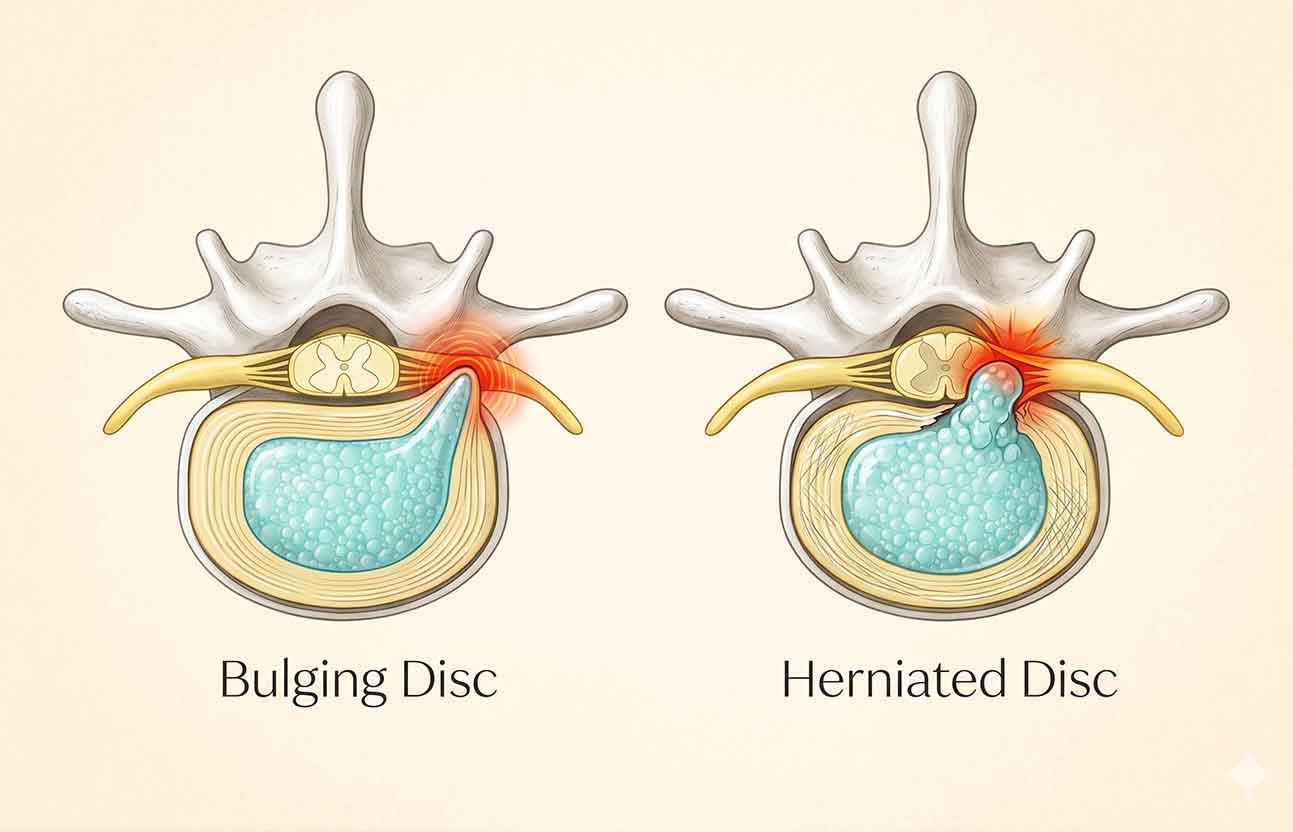
Back and neck pain are among the most common musculoskeletal problems affecting people worldwide. In many cases, these symptoms are linked to conditions involving the spinal discs, particularly bulging discs and herniated discs. Although these terms are often used interchangeably, they describe different conditions that affect the spine in distinct ways.
Understanding the difference between a herniated disc and a bulging disc is important because the symptoms, severity, treatment approach, and recovery process can vary significantly. While both conditions involve damage or changes to the intervertebral discs, a herniated disc generally poses a greater risk of nerve compression and associated neurological symptoms.
This comprehensive guide explains the anatomy of spinal discs, how bulging and herniated discs develop, their symptoms, causes, diagnosis, treatment options, and prevention strategies.
What Is a Spinal Disc?
The human spine consists of vertebrae stacked on top of one another. Between these bones are soft, flexible cushions called intervertebral discs. These discs absorb shock, reduce friction between vertebrae, and allow the spine to bend, twist, and move comfortably.
Each spinal disc contains two important components:
Outer Layer (Annulus Fibrosus)
The annulus fibrosus is a tough, fibrous outer ring that surrounds the disc and provides structural support. It helps contain the softer center of the disc and protects it from excessive pressure during movement.
- Strong protective outer covering
- Maintains disc shape and stability
- Resists spinal pressure and stress
- Supports spinal flexibility
Inner Core (Nucleus Pulposus)
The nucleus pulposus is a soft, gel-like center that acts as the spine's natural shock absorber. It distributes pressure evenly across the spine during activities such as walking, running, lifting, and bending.
- Soft and jelly-like structure
- Absorbs impact and shock
- Supports spinal movement
- Helps maintain disc flexibility
What Is a Bulging Disc?
A bulging disc occurs when the disc extends beyond its normal boundaries due to gradual wear, aging, or repetitive stress. In this condition, the outer wall of the disc remains intact, but the disc begins to protrude outward. It can be compared to a hamburger that is slightly larger than its bun, causing the edges to bulge outward.
Bulging discs are often associated with age-related degeneration and may not always cause symptoms. Many people discover they have a bulging disc only after undergoing imaging tests for unrelated reasons.
Characteristics of a Bulging Disc
- Disc protrudes outward beyond normal position
- Outer disc wall remains intact
- Usually develops gradually over time
- Commonly related to aging and degeneration
- May not cause nerve compression
- Often discovered incidentally during imaging
What Is a Herniated Disc?
A herniated disc occurs when the outer layer of the disc develops a tear or rupture, allowing the inner gel-like material to push outward. Because the inner material can come into contact with nearby spinal nerves, a herniated disc often causes more significant symptoms than a bulging disc.
This condition is also commonly referred to as a slipped disc, ruptured disc, or prolapsed disc. Herniated discs can develop gradually or occur suddenly following an injury, heavy lifting incident, or sudden twisting movement.
Characteristics of a Herniated Disc
- Tear or rupture in the outer disc layer
- Inner disc material protrudes through the tear
- Greater risk of nerve compression
- Often causes inflammation and pain
- May result in numbness or weakness
- Can occur suddenly or progressively
Herniated Disc vs Bulging Disc: What Is the Difference?
Although both conditions affect the spinal discs, the key difference lies in the extent of disc damage. In a bulging disc, the outer layer remains intact while the disc protrudes outward. In a herniated disc, the outer layer is torn, allowing the inner material to escape.
Because herniated discs are more likely to compress nearby nerves, they often produce stronger symptoms and may require more intensive treatment.
| Feature | Bulging Disc | Herniated Disc |
|---|---|---|
| Disc Structure | Bulges outward | Inner material escapes |
| Outer Layer | Intact | Torn or ruptured |
| Severity | Usually mild to moderate | Often more severe |
| Nerve Compression | Less common | More common |
| Pain Intensity | Mild to moderate | Moderate to severe |
| Progression | Gradual | Can be sudden |
| Treatment Complexity | Usually conservative | May require advanced treatment |
What Causes Bulging and Herniated Discs?
Disc problems rarely occur due to a single factor. Instead, they usually develop through a combination of aging, mechanical stress, lifestyle factors, and genetic predisposition. Over time, spinal discs naturally lose moisture and elasticity, making them more vulnerable to injury.
Several factors can increase the likelihood of developing a bulging or herniated disc.
Common Causes
- Aging and disc degeneration
- Poor posture
- Repetitive bending and twisting
- Heavy lifting
- Obesity
- Sedentary lifestyle
- Sports injuries
- Workplace strain
- Motor vehicle accidents
- Genetic predisposition
Symptoms of a Bulging Disc
Many bulging discs produce little or no symptoms. However, if the bulging disc begins to irritate surrounding tissues or place pressure on nearby nerves, symptoms may gradually develop. The severity of symptoms often depends on the location and size of the bulge.
Common Symptoms of a Bulging Disc
- Mild to moderate back pain
- Neck pain
- Muscle tightness
- Reduced flexibility
- Localized discomfort
- Occasional tingling sensations
- Stiffness after prolonged sitting
- Mild weakness in some cases
Symptoms of a Herniated Disc
Because a herniated disc involves a rupture of the outer disc wall, it is more likely to cause nerve irritation and inflammation. Symptoms can be more intense and may radiate beyond the spine into the arms or legs depending on the location of the affected disc.
Common Symptoms of a Herniated Disc
- Severe back or neck pain
- Sciatica
- Pain radiating down the leg
- Arm pain
- Numbness
- Tingling sensations
- Muscle weakness
- Burning or shooting pain
- Reduced mobility
Emergency Warning Signs
Certain symptoms require immediate medical attention because they may indicate serious nerve compression.
- Loss of bladder control
- Loss of bowel control
- Progressive muscle weakness
- Difficulty walking
- Severe numbness in the groin area
How Are Bulging and Herniated Discs Diagnosed?
Accurate diagnosis is essential because treatment plans vary depending on the type and severity of disc damage. Doctors evaluate symptoms, physical function, and nerve involvement before confirming the diagnosis through imaging studies.
Diagnostic Methods
- Medical history review
- Physical examination
- Neurological assessment
- MRI scan
- CT scan
- X-rays (to assess spinal structure)
- Electromyography (EMG) in selected cases
Treatment Options for a Bulging Disc
Most bulging discs can be managed successfully without surgery. Treatment focuses on reducing pain, improving mobility, strengthening supporting muscles, and preventing further disc damage.
Common Bulging Disc Treatments
- Physical therapy
- Posture correction
- Core strengthening exercises
- Pain-relief medications
- Anti-inflammatory medications
- Weight management
- Activity modification
- Ergonomic adjustments
- Ayurvedic supportive therapies
Treatment Options for a Herniated Disc
Treatment for a herniated disc depends on symptom severity, nerve involvement, and the patient's overall health. Many patients improve through conservative care, while others may require interventional procedures or surgery.
Conservative Treatments
- Rest and activity modification
- Physical therapy
- Pain medications
- Anti-inflammatory medications
- Heat and cold therapy
Advanced Treatments
- Epidural steroid injections
- Nerve block procedures
- Minimally invasive spine procedures
- Radiofrequency treatments
Surgical Treatments
Surgery may be recommended if symptoms persist or neurological deficits worsen.
- Microdiscectomy
- Discectomy
- Spinal decompression surgery
- Endoscopic spine surgery
Can Ayurveda Help Manage Disc Problems?
Ayurveda takes a holistic approach to spinal health by addressing inflammation, muscular imbalance, circulation, and overall wellness. While Ayurvedic therapies do not replace emergency medical treatment, many patients use them alongside conventional care to support recovery and improve quality of life.
Common Ayurvedic Therapies
- Kati Basti
- Abhyanga
- Panchakarma
- Pizhichil
- Herbal medications
- Clinical Yoga
- Lifestyle counseling
- Dietary modifications
How Can You Prevent Disc Problems?
Maintaining a healthy spine requires consistent lifestyle habits. Many disc-related conditions can be prevented or delayed by improving posture, strengthening the core muscles, and reducing unnecessary stress on the spine.
Prevention Tips
- Maintain a healthy weight
- Exercise regularly
- Strengthen core muscles
- Practice proper lifting techniques
- Avoid prolonged sitting
- Improve posture
- Stay physically active
- Use ergonomic furniture
- Stretch regularly
- Avoid smoking
When Should You See a Doctor?
Occasional back pain is common, but persistent symptoms should never be ignored. Early diagnosis often prevents complications and helps achieve better treatment outcomes.
Seek Medical Evaluation If You Experience
- Persistent back pain
- Chronic neck pain
- Pain radiating into arms or legs
- Numbness or tingling
- Muscle weakness
- Difficulty performing daily activities
- Symptoms lasting several weeks
Conclusion
Although bulging discs and herniated discs both involve damage to the spinal discs, they are not the same condition. A bulging disc occurs when the disc extends beyond its normal position while remaining intact, whereas a herniated disc involves a tear in the outer layer that allows the inner material to protrude outward.
Understanding these differences is crucial for accurate diagnosis and appropriate treatment. With early intervention, lifestyle modifications, physical therapy, and supportive treatments such as Ayurveda and Clinical Yoga, many individuals can successfully manage symptoms and maintain a healthy, active lifestyle.
Frequently Asked Questions
Is a herniated disc worse than a bulging disc?
In most cases, yes. A herniated disc involves a tear in the outer disc wall and is more likely to compress spinal nerves, resulting in stronger pain, numbness, weakness, and mobility issues.
Key Points
- Higher risk of nerve compression
- Greater inflammation
- More severe symptoms
- May require advanced treatment
Can a bulging disc become a herniated disc?
Yes. If pressure on the disc continues or the outer layer weakens further, a bulging disc can eventually develop into a herniated disc.
Risk Factors
- Aging
- Repetitive strain
- Poor posture
- Heavy lifting
- Obesity
Do all herniated discs require surgery?
No. Most herniated discs improve through conservative treatment methods, including physical therapy, medications, and lifestyle modifications.
Non-Surgical Options
- Physical therapy
- Medication
- Exercise programs
- Steroid injections
- Pain management
Which is more painful: a bulging disc or a herniated disc?
A herniated disc is generally more painful because it often irritates or compresses nearby nerves, causing radiating pain and neurological symptoms.
Typical Symptoms
- Sharp pain
- Sciatica
- Tingling
- Numbness
- Muscle weakness
Can exercise help a bulging or herniated disc?
Yes. When performed under professional guidance, exercise can strengthen supporting muscles, improve flexibility, and reduce stress on the spine.
Beneficial Activities
- Walking
- Stretching
- Clinical Yoga
- Core strengthening
- Physical therapy exercises