



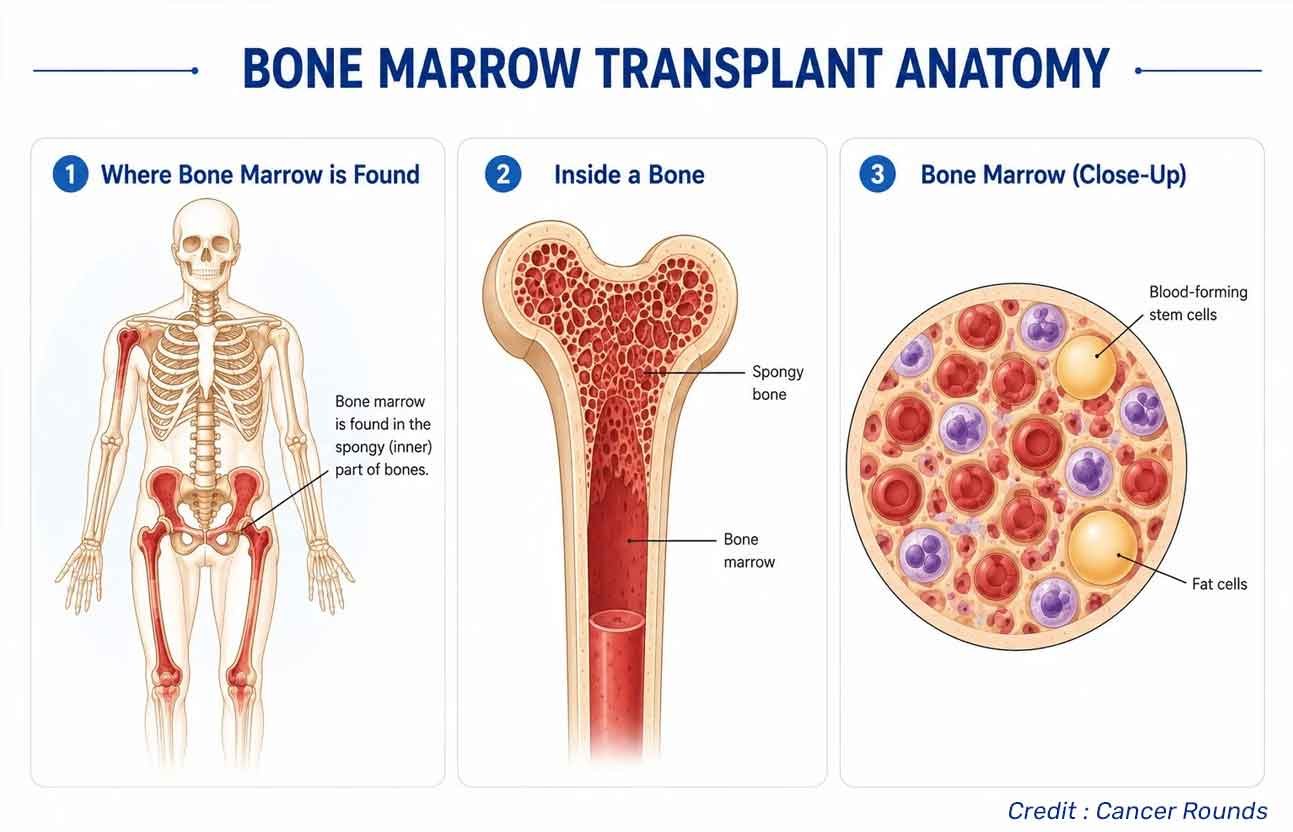
Bone marrow transplantation is an advanced treatment used for several serious blood cancers, bone marrow disorders, inherited blood conditions and certain immune-system disorders. For patients considering treatment in India, one of the most important practical questions is often the cost of a bone marrow transplant in Kerala.
The total cost of a bone marrow transplant can vary considerably from one patient to another. The type of transplant, underlying disease, donor availability, treatment protocol, duration of hospitalisation, medicines, investigations and management of complications can all influence the final expense.
As a general reference, publicly available information from Malabar Cancer Centre in Kerala indicates an approximate cost of ₹5–6 lakh for autologous hematopoietic stem cell transplantation and ₹10–15 lakh for allogeneic transplantation. These figures are indicative and should not be considered a fixed price for every patient.
For international patients, the overall budget may also include travel, accommodation, transportation, pre-transplant evaluation and post-transplant follow-up. Therefore, obtaining an individual treatment estimate after medical records have been reviewed is an important step before making travel arrangements.
What Is a Bone Marrow Transplant?
A bone marrow transplant, medically referred to more broadly as hematopoietic stem cell transplantation (HSCT), involves replacing or restoring the blood-forming stem cells in a patient's body. These stem cells can develop into red blood cells, white blood cells and platelets and are essential for maintaining a healthy blood and immune system.
Although the term "bone marrow transplant" may sound like a surgical procedure, transplantation itself is generally not conventional surgery. The stem cells are administered to the patient, often through an intravenous or central venous line, following the appropriate preparative treatment. Malabar Cancer Centre describes HSCT as a procedure similar to a blood transfusion, carried out under strict monitoring and infection-control precautions.
Depending on the disease and treatment plan, the stem cells may come from the patient or from another suitable donor. This distinction is one of the major factors affecting the overall cost.
What Is the Cost of Bone Marrow Transplant in Kerala?
There is no single standard price for bone marrow transplantation in Kerala because every transplant is planned according to the patient's medical condition.
As an indicative reference, Malabar Cancer Centre currently states that the cost may be around ₹5–6 lakh for autologous HSCT and ₹10–15 lakh for allogeneic HSCT.
However, other published Indian cost studies demonstrate that the actual expenditure can extend beyond these ranges, particularly for more complex allogeneic transplants. One Indian analysis estimated direct in-hospital costs of approximately ₹4–7 lakh for autologous HSCT, ₹11–17 lakh for matched-related donor transplantation and ₹21–28 lakh for unrelated-donor or haploidentical transplantation. The same analysis found that complications could substantially increase the total cost.
These differences highlight why patients should not rely on a single advertised figure when planning treatment. A personalised quotation from the transplant centre is more meaningful than a general online price.
Autologous Bone Marrow Transplant Cost in Kerala
An autologous transplant uses the patient's own blood-forming stem cells. The cells are collected before intensive treatment and stored appropriately before being returned to the patient after the conditioning treatment.
Autologous transplantation is used for selected diseases, including certain cases of multiple myeloma and lymphoma. Because the patient's own cells are used, there is no requirement to identify and prepare an external donor, making the treatment pathway different from an allogeneic transplant.
According to information published by Malabar Cancer Centre, the indicative cost of autologous HSCT is around ₹5–6 lakh.
The final cost may still vary depending on the patient's disease, medicines, diagnostic investigations, duration of hospitalisation and any complications during treatment.
Allogeneic Bone Marrow Transplant Cost in Kerala
An allogeneic transplant uses blood-forming stem cells obtained from another person. Depending on the situation, the donor may be a matched sibling, another compatible family member, an unrelated donor or, in selected cases, a haploidentical donor.
Allogeneic transplantation is used for several blood and bone marrow disorders, including certain leukemias and other serious conditions. Because the treatment involves donor evaluation, compatibility testing, additional medications and careful management of immune-related complications, it is generally more complex and expensive than an autologous transplant.
Malabar Cancer Centre provides an indicative cost of approximately ₹10–15 lakh for allogeneic HSCT. However, published Indian data show that the cost can be considerably higher in some transplant settings, particularly when unrelated or haploidentical donors are involved or when complications require additional treatment.
Why Does Bone Marrow Transplant Cost Vary?
The cost of a bone marrow transplant is influenced by many factors, which is why two patients receiving transplantation in the same hospital may have different final expenses.
The first major factor is the type of transplant. Autologous transplantation generally has a different cost structure from allogeneic transplantation because donor-related testing and management are not required in the same way.
The patient's underlying disease also plays an important role. The diagnosis, disease stage, previous treatments and overall health determine the treatment protocol and the intensity of the transplant process.
The availability and type of donor can also affect the cost of allogeneic transplantation. A matched sibling donor, matched unrelated donor and haploidentical donor may involve different medical procedures and levels of preparation.
Pre-transplant investigations are another important component. Patients may require blood tests, bone marrow evaluation, imaging, infection screening, organ-function assessment, HLA typing and other specialised investigations before transplantation.
The conditioning treatment given before the stem-cell infusion also contributes to the overall cost. Depending on the disease and transplant plan, patients may require intensive chemotherapy or other preparative treatment.
How Much Does Hospitalisation Add to the Cost?
Bone marrow transplantation requires close medical observation because the patient's immune system can become significantly weakened during treatment.
The duration of hospitalisation varies according to the transplant type, underlying disease and recovery. Information published by Malabar Cancer Centre indicates approximately three to four weeks for autologous HSCT and four to six weeks for allogeneic HSCT in its patient information material.
A longer hospital stay naturally increases accommodation, nursing, investigations, medicines and other hospital-related expenses.
Patients should therefore ask the hospital whether the initial quotation is based on an expected length of stay and how additional days would be charged if recovery takes longer than anticipated.
What Medicines Are Included in the Cost?
Medicines can represent a significant part of the overall cost of hematopoietic stem cell transplantation. Published Indian data have shown that drug costs can account for a substantial proportion of direct hospital expenditure.
Depending on the transplant, patients may require conditioning medicines, antibiotics, antiviral or antifungal medicines, immunosuppressive drugs, supportive medicines and blood products.
For allogeneic transplantation, medicines used to prevent or manage graft-versus-host disease may also form an important part of treatment.
Because medication requirements vary from patient to patient, it is important to ask whether medicines are included in the hospital's quoted transplant package or billed separately.
Does the Bone Marrow Transplant Cost Include Pre-Transplant Tests?
Not necessarily.
A transplant centre may perform several investigations before treatment begins to determine whether the patient is medically suitable for transplantation and to establish the appropriate treatment plan.
Depending on the case, these may include blood investigations, bone marrow studies, imaging, infection screening, organ-function tests and HLA or donor-related testing.
Patients should ask for a detailed estimate that clearly explains which investigations are included in the package and which are charged separately.
What Happens If Complications Occur?
Complications are one of the most important reasons why the final cost of transplantation can differ from the initial estimate.
Patients undergoing HSCT may be vulnerable to infections and other complications during the transplant and recovery period. Allogeneic transplantation also carries the risk of graft-versus-host disease, which may require additional treatment and prolonged medical monitoring.
Published Indian research has shown that transplant-related complications can substantially increase hospitalisation costs.
For this reason, patients should not plan their finances around the minimum advertised transplant price alone. A reasonable financial plan should include a reserve for additional treatment and an extended hospital stay if required.
Bone Marrow Transplant Cost in Government and Private Hospitals
Kerala has both government and private healthcare institutions providing specialised medical services. The cost structure can differ between institutions depending on the facilities, transplant programme, medical team, room category, laboratory services and supportive-care infrastructure.
Government-supported treatment programmes may offer specific package rates or financial assistance for eligible patients. Kerala's published medical treatment packages include different rates for certain bone marrow transplantation procedures depending on the disease and transplant type.
For patients considering private hospitals, the quoted cost may be presented as a package or as individual charges for different components of treatment.
Therefore, comparing hospitals based solely on the lowest price may not provide a complete picture. Patients should also consider the experience of the transplant team, transplant infrastructure, infection-control facilities, intensive-care support, laboratory services and long-term follow-up.
Is Bone Marrow Transplant Cheaper in Kerala Than Other Countries?
India is considered by many international patients because several advanced medical treatments can be available at comparatively lower costs than in many high-income countries. However, the cost advantage should not be the only factor when choosing a transplant centre.
Bone marrow transplantation is a highly specialised treatment that requires experienced doctors, trained nursing teams, appropriate transplant units, laboratory facilities, blood-bank support, infection-control systems and access to intensive care when necessary.
The Indian Council of Medical Research has published National Guidelines for Hematopoietic Cell Transplantation, which outline requirements for safe and successful HCT centres, including the need for an experienced transplant team and adequate transplant activity.
For a patient, the right transplant centre should therefore be selected by considering the complete treatment environment rather than cost alone.
Bone Marrow Transplant Cost for International Patients
For patients travelling to Kerala from another country, the medical treatment cost is only one part of the overall budget.
International patients may also need to account for flights, visa-related expenses, accommodation, airport transfers, local transportation, food and the expenses of accompanying family members.
The length of stay is particularly important for transplant patients. Even after discharge from the hospital, patients may need regular follow-up and monitoring before they are medically fit to return home.
This makes it important for international patients to discuss not only the transplant cost but also the expected treatment timeline and follow-up requirements with the hospital before travelling.
Bone Marrow Transplant in Kerala for GCC Patients
Kerala is accessible to patients travelling from Gulf countries such as the UAE, Saudi Arabia, Qatar, Oman, Kuwait and Bahrain. Families from the GCC who are considering bone marrow transplantation in India can begin the process by sharing their medical records for preliminary review.
A medical coordination service can help organise specialist consultations, hospital appointments, treatment schedules, accommodation and transportation so that the patient's family has a clearer understanding of the treatment journey before travelling.
For complex treatments such as bone marrow transplantation, early coordination is particularly useful because donor evaluation, pre-transplant testing and treatment planning may require additional time.
How Should Patients Compare Bone Marrow Transplant Costs?
When comparing hospitals, patients should look beyond the headline price.
A lower initial quotation may not necessarily represent a lower final cost if important investigations, medicines, donor testing, blood products or additional hospitalisation are excluded.
A useful quotation should clearly explain the expected transplant cost, what is included, what is excluded, the expected duration of hospitalisation and how additional expenses will be handled if complications occur.
Patients should also ask whether post-transplant medicines and follow-up consultations are included or billed separately.
Financial Assistance for Bone Marrow Transplantation
The financial burden of transplantation can be significant, and some patients may be eligible for support through government programmes, insurance, charitable funds or hospital-based assistance.
Eligibility and coverage depend on the patient's circumstances and the specific programme.
Patients should discuss financial assistance with the hospital's billing, insurance or patient-support department before beginning treatment. Early financial planning can help families understand their expected expenses and available support.
How Medinglo Can Help International Patients
For an international patient, arranging treatment involves more than selecting a hospital and booking a flight. Bone marrow transplantation requires careful coordination between the patient, transplant specialist, hospital and family.
Medinglo can assist international patients in coordinating medical records, specialist consultations, hospital communication, treatment scheduling, accommodation, airport transfers, local transportation and other aspects of the medical travel journey.
For patients travelling from GCC countries, additional support with communication and coordination can make it easier for patients and their families to understand the treatment process before arriving in India.
Frequently Asked Questions About Bone Marrow Transplant Cost in Kerala
What is the average cost of a bone marrow transplant in Kerala?
The cost varies depending on the type of transplant and the patient's medical condition. As an indicative reference, Malabar Cancer Centre publishes approximately ₹5–6 lakh for autologous HSCT and ₹10–15 lakh for allogeneic HSCT. These figures are not fixed quotations and the actual cost may vary.
How much does an autologous bone marrow transplant cost in Kerala?
An autologous transplant may cost approximately ₹5–6 lakh based on the published patient information from Malabar Cancer Centre. The final expense depends on the disease, treatment protocol, hospitalisation, medicines and complications.
How much does an allogeneic bone marrow transplant cost in Kerala?
Malabar Cancer Centre provides an indicative range of approximately ₹10–15 lakh for allogeneic HSCT. The actual cost may be higher depending on donor type, treatment complexity, hospital stay and complications.
How long does a bone marrow transplant take?
The overall treatment journey can extend over several weeks and requires preparation before transplantation and monitoring afterward. Malabar Cancer Centre indicates approximately three to four weeks of hospitalisation for autologous HSCT and four to six weeks for allogeneic HSCT in its patient information material.
Does the bone marrow transplant cost include medicines?
This depends on the hospital and treatment package. Some medicines and supportive treatments may be included, while others may be billed separately. Patients should request a written quotation detailing inclusions and exclusions.
Can international patients undergo bone marrow transplantation in Kerala?
International patients can seek evaluation and treatment at appropriate transplant centres in Kerala. Suitability for transplantation depends on the patient's diagnosis, overall health, disease status, donor availability and specialist assessment.
Can the cost increase after the transplant?
Yes. Additional hospitalisation, medicines, investigations, infections, graft-versus-host disease and other complications can increase the total cost of treatment. Published Indian studies have documented substantial variation in HSCT costs depending on donor type and complications.
Conclusion
The cost of a bone marrow transplant in Kerala, India depends on several factors, with the type of transplant being one of the most important. Autologous transplantation generally has a lower cost than allogeneic transplantation because the patient's own stem cells are used.
As a general reference, Malabar Cancer Centre currently indicates approximately ₹5–6 lakh for autologous HSCT and ₹10–15 lakh for allogeneic HSCT. However, these figures should be viewed only as indicative ranges. The actual cost can vary depending on the patient's condition, donor type, treatment protocol, medicines, hospitalisation and complications.
For international patients, the overall cost should also include accommodation, transportation, travel and follow-up expenses. More importantly, patients should choose a transplant centre based not only on affordability but also on the experience of the transplant team, infrastructure, infection-control standards, donor support and long-term follow-up.
If you are considering bone marrow transplant treatment in Kerala, obtaining a specialist medical assessment and a personalised treatment quotation is the best way to understand the expected cost and treatment pathway.
Medical Disclaimer
This article is intended for general educational and informational purposes only. Bone marrow transplantation is a complex medical procedure, and treatment costs vary according to the patient's condition, transplant type, hospital, treatment protocol and complications. The costs mentioned in this article are indicative and should not be considered a formal medical quotation. Patients should consult a qualified haematologist or transplant specialist for an individual medical assessment and treatment estimate.