



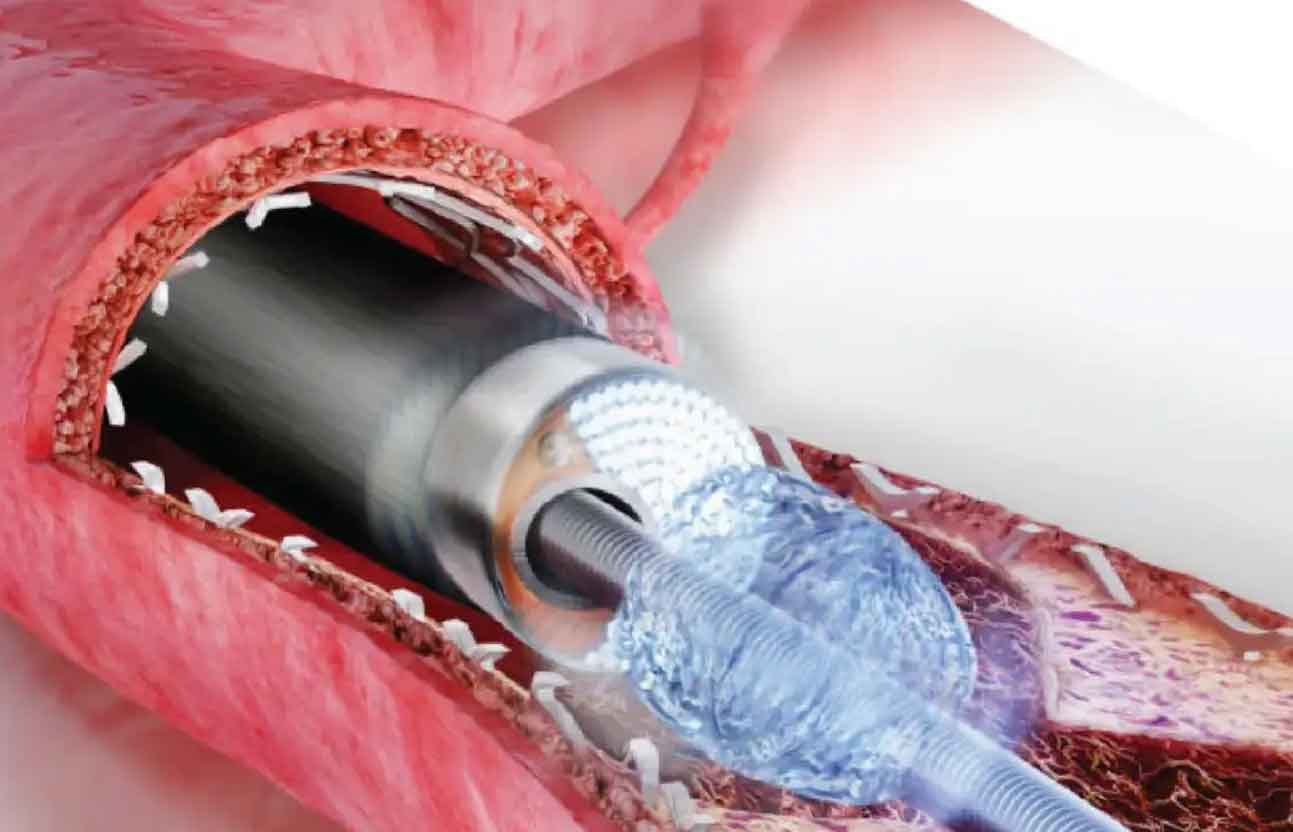
Laser angioplasty is an advanced catheter-based technique used in selected cases of coronary artery disease when a conventional balloon angioplasty may not be sufficient on its own. Also known as excimer laser coronary atherectomy (ELCA), the technique uses controlled laser energy delivered through a specialised catheter to modify or remove plaque and other material that is narrowing a coronary artery.
Unlike conventional angioplasty, which primarily uses a balloon to compress plaque against the artery wall, laser angioplasty can use laser energy to break down certain obstructive material within the artery. It may be considered in complex coronary interventions, including some cases involving difficult-to-treat lesions or narrowing that has developed inside a previously placed stent. Excimer laser coronary atherectomy is an established medical technology with regulatory-approved devices for coronary use.
For patients considering treatment in Kerala, understanding how laser angioplasty works, when it may be appropriate, its potential benefits and risks, and the factors that influence treatment cost can help in making an informed decision.
What Is Laser Angioplasty?
Laser angioplasty is a form of coronary intervention in which a thin catheter containing an excimer laser system is guided through the blood vessel to the narrowed portion of a coronary artery.
The laser produces short pulses of ultraviolet energy. When appropriately applied to the obstructive material, the energy can break down plaque and other material into very small particles. This can help create a pathway through a difficult lesion and allow the cardiologist to subsequently use balloon angioplasty, a stent, or another appropriate technique when necessary.
Excimer laser technology is different from a conventional surgical laser because it is designed for controlled tissue or plaque modification with very limited penetration depth. The technique is therefore performed under specialised conditions by an experienced interventional cardiology team.
How Does Laser Angioplasty Work?
The procedure begins in much the same way as other catheter-based coronary interventions. A small catheter is introduced through an artery, commonly through the wrist or groin, and carefully guided toward the coronary arteries.
After the affected artery and blockage have been assessed, the specialised laser catheter is advanced over a guidewire to the target area. The cardiologist activates the laser in controlled pulses to modify the obstructing material.
Depending on the characteristics of the blockage, the laser may be followed by balloon angioplasty or another coronary intervention. A stent may also be required when clinically appropriate to help maintain adequate blood flow through the treated artery.
The exact technique depends on the location, length and composition of the blockage, the condition of the artery, previous treatments and the patient's overall cardiac condition.
When Is Laser Angioplasty Recommended?
Laser angioplasty is not required for every patient with coronary artery disease. Conventional balloon angioplasty and stent placement remain appropriate for many patients.
Laser atherectomy may be considered when a coronary lesion presents specific technical challenges. These can include certain complex or difficult-to-cross lesions and selected cases of in-stent restenosis, where an artery becomes narrowed again within or around a previously implanted stent.
The decision is made after reviewing coronary angiography and, when appropriate, other imaging or diagnostic information. The cardiologist determines whether laser treatment offers a useful advantage over conventional techniques or other available methods.
Therefore, the phrase “laser angioplasty” should not be interpreted as a universally better form of angioplasty. It is a specialised technique used selectively according to the patient's anatomy and clinical requirements.
Laser Angioplasty Procedure: Step by Step
Before the procedure, the patient undergoes a detailed cardiac evaluation. This may include medical history, blood tests, electrocardiography, echocardiography and coronary imaging or angiography, depending on the individual case.
On the day of the procedure, the patient is usually given local anaesthesia at the catheter entry site, with sedation when appropriate. A catheter is introduced into the artery and guided toward the coronary circulation.
Once the narrowed area has been reached, the laser catheter is positioned across the lesion. Controlled laser pulses are then used to modify the obstructive material. The cardiologist may make multiple controlled passes depending on the characteristics of the lesion and the response during treatment.
After laser treatment, balloon angioplasty or another intervention may be performed if necessary. A stent may be placed when clinically indicated.
The patient is then monitored following the procedure. The duration of observation and hospital stay depends on the complexity of the intervention, the patient's health and whether any additional treatment is required.
Benefits of Laser Angioplasty
One of the main potential benefits of laser angioplasty is that it provides an additional treatment option for selected coronary lesions that may be technically challenging with conventional balloon angioplasty alone.
The technique can modify certain forms of plaque and obstructive material, potentially allowing the interventional cardiologist to create a more suitable pathway for subsequent balloon treatment or stent placement.
Laser atherectomy can also be considered in selected cases involving restenosis within a previous stent. Regulatory records document coronary excimer laser technology and its use in specific coronary applications, including certain forms of restenosis.
Another potential advantage is that the laser catheter can be used as part of a broader interventional strategy rather than necessarily replacing balloon angioplasty or stenting. The treatment can therefore be tailored to the characteristics of the individual coronary lesion.
However, the benefits depend heavily on patient selection and operator experience. Laser angioplasty should not be presented as a treatment that is automatically safer, faster or more effective than conventional angioplasty for every patient.
Laser Angioplasty vs Conventional Angioplasty
Conventional coronary angioplasty generally uses a balloon catheter to widen a narrowed artery. A stent may then be inserted to help keep the artery open.
Laser angioplasty uses a specialised excimer laser catheter to modify obstructive material before or alongside other coronary intervention techniques.
The two approaches are therefore not necessarily competing treatments. In some complex cases, laser treatment may be used as an additional technique to facilitate successful coronary intervention.
The appropriate approach depends on the characteristics of the blockage, the condition of the artery, previous procedures and the cardiologist's assessment.
What Is the Cost of Laser Angioplasty in Kerala?
The cost of laser angioplasty in Kerala can vary significantly because the procedure is highly dependent on the patient's individual coronary condition and the technology required during treatment.
Factors that can influence the final cost include the complexity and location of the blockage, diagnostic investigations, cardiologist and procedure charges, use of the laser catheter, angioplasty balloons, stents when required, medications, hospitalisation and treatment of any complications.
Because laser angioplasty is a specialised intervention, a simple online procedure price may not accurately represent the final treatment expense.
For international patients, the overall medical budget may also include consultation, diagnostic evaluation, accommodation, local transportation, follow-up care and other travel-related services.
For this reason, patients should obtain a personalised treatment estimate after medical records and coronary imaging have been reviewed rather than relying solely on an advertised package price.
Is Laser Angioplasty More Expensive Than Conventional Angioplasty?
Laser angioplasty may cost more than standard angioplasty because it can involve specialised laser equipment and disposable laser catheters in addition to the other components of coronary intervention.
However, the difference in cost varies from patient to patient. Not every patient undergoing coronary angioplasty will require laser treatment, and additional procedures may also affect the final bill.
A meaningful cost comparison should therefore consider the complete treatment plan rather than comparing only the basic angioplasty procedure charges.
Risks and Possible Complications
Like other coronary interventions, laser angioplasty carries potential risks. These can include bleeding or bruising at the catheter-entry site, blood-vessel injury, coronary artery complications, abnormal heart rhythm, blood clots, heart attack, stroke or the need for additional intervention.
Laser atherectomy also has specific technical considerations, which is why careful patient selection, appropriate equipment and experienced procedural teams are important.
The actual level of risk depends on the patient's age, general health, severity of coronary artery disease, complexity of the blockage, previous procedures and other medical factors.
Patients should discuss the expected benefits and potential risks with their cardiologist before deciding on treatment.
Recovery After Laser Angioplasty
Recovery depends on the complexity of the procedure and the patient's overall health. After the intervention, the medical team monitors the patient for signs of bleeding, changes in heart rhythm, chest discomfort and other potential complications.
Patients are generally advised to follow their prescribed medications carefully and attend follow-up appointments. If a stent has been placed, antiplatelet medication may be prescribed for a specific period according to the cardiologist's treatment plan.
Long-term recovery also involves addressing the underlying causes of coronary artery disease. This may include controlling blood pressure, diabetes and cholesterol, stopping smoking, maintaining a healthy weight, following a heart-healthy diet and undertaking appropriate physical activity.
Laser angioplasty treats a specific coronary obstruction; it does not by itself eliminate the underlying risk factors for cardiovascular disease.
Choosing Cardiac Care for Laser Angioplasty in Kerala
When considering laser angioplasty in Kerala, patients should focus on the expertise and facilities required for complex coronary intervention rather than choosing a centre based only on the advertised procedure name or price.
It is important to confirm that the cardiac centre has appropriate catheterisation laboratory facilities, access to coronary imaging and advanced interventional techniques, trained interventional cardiologists and facilities for monitoring and managing potential complications.
Patients can also ask whether the medical team has experience with excimer laser coronary atherectomy and whether the technique is appropriate for their particular coronary anatomy.
For international patients, additional services such as medical record review, appointment coordination, language assistance, accommodation support, transportation and follow-up communication can make the treatment journey easier.
Most importantly, the decision to undergo laser angioplasty should be based on a specialist review of the patient's medical history, coronary angiogram and overall condition. In some cases, conventional angioplasty, another atherectomy technique, bypass surgery or medical treatment may be more appropriate.
Laser Angioplasty for International Patients in Kerala
Kerala is one of India's established healthcare destinations, and international patients may consider the state for specialised cardiac evaluation and treatment.
Patients travelling from the GCC or other countries should ideally share their previous medical records, angiography images, cardiac reports, medication history and relevant laboratory results before travelling. This allows the treating team to assess the case and determine whether an in-person evaluation or additional diagnostic testing is required.
International patients should also plan sufficient time for consultation, investigations, treatment and follow-up rather than arranging travel around the procedure alone.
Support with appointments, travel coordination, accommodation and local transportation can help simplify the medical journey.
Is Laser Angioplasty a Permanent Cure?
Laser angioplasty is a procedure used to treat a specific arterial obstruction. It should not be described as a permanent cure for coronary artery disease.
Coronary artery disease is a long-term condition associated with factors such as high cholesterol, diabetes, high blood pressure, smoking, obesity, physical inactivity and family history.
Even after a successful intervention, ongoing medical care and lifestyle management remain important. Regular follow-up and adherence to prescribed medication can help manage cardiovascular risk over the long term.
Frequently Asked Questions
Is laser angioplasty better than normal angioplasty?
Not necessarily. Laser angioplasty is a specialised technique used in selected cases. Conventional balloon angioplasty and stenting remain appropriate for many coronary blockages. The best approach depends on the patient's individual coronary anatomy and clinical condition.
Is laser angioplasty used for blocked heart arteries?
Yes. Excimer laser coronary atherectomy can be used in selected coronary interventions to modify obstructive material within a narrowed artery. It is generally used when the characteristics of the lesion make specialised plaque modification useful.
Can laser angioplasty remove a stent blockage?
Laser atherectomy may be considered in selected cases of in-stent restenosis, where narrowing develops within a previously treated artery. Whether it is appropriate depends on the specific lesion and previous treatment.
How long does laser angioplasty take?
The duration varies according to the complexity of the blockage and whether additional procedures such as balloon angioplasty or stent placement are required. A cardiologist can provide a more accurate estimate after reviewing the patient's coronary imaging.
What is the cost of laser angioplasty in Kerala?
There is no single fixed price. Cost depends on the complexity of the procedure, laser equipment and catheter requirements, diagnostic tests, stents or other devices, hospitalisation and the patient's overall treatment needs. A personalised estimate should be obtained after medical evaluation.
Is laser angioplasty safe?
Laser angioplasty is an established catheter-based technology, but like all invasive coronary procedures it carries potential risks. The individual risk depends on the patient's condition and the complexity of the intervention.
Can international patients undergo laser angioplasty in Kerala?
International patients can seek cardiac evaluation and treatment in Kerala. Medical records and previous cardiac investigations should ideally be reviewed before travel so that the appropriate treatment pathway can be planned.
Conclusion
Laser angioplasty in Kerala offers a specialised option for selected patients with complex coronary artery disease. Using excimer laser energy through a catheter, the technique can modify certain types of obstructive material and may help facilitate treatment when conventional angioplasty alone presents technical challenges.
The procedure is particularly relevant to carefully selected complex coronary cases, including some forms of in-stent restenosis. However, laser angioplasty is not required for every patient with coronary artery disease, and the most appropriate treatment depends on detailed cardiac assessment.
Patients considering treatment in Kerala should focus on appropriate specialist evaluation, advanced interventional facilities, transparent treatment planning and a personalised cost estimate. For international patients, early review of medical records and coordination of the complete treatment journey can make the process more efficient.
Medical Disclaimer: This article is intended for general educational purposes and should not be considered medical advice. Laser angioplasty may not be suitable for every patient. Treatment decisions should be made by a qualified cardiologist after reviewing the patient's medical history, diagnostic tests and coronary imaging.