



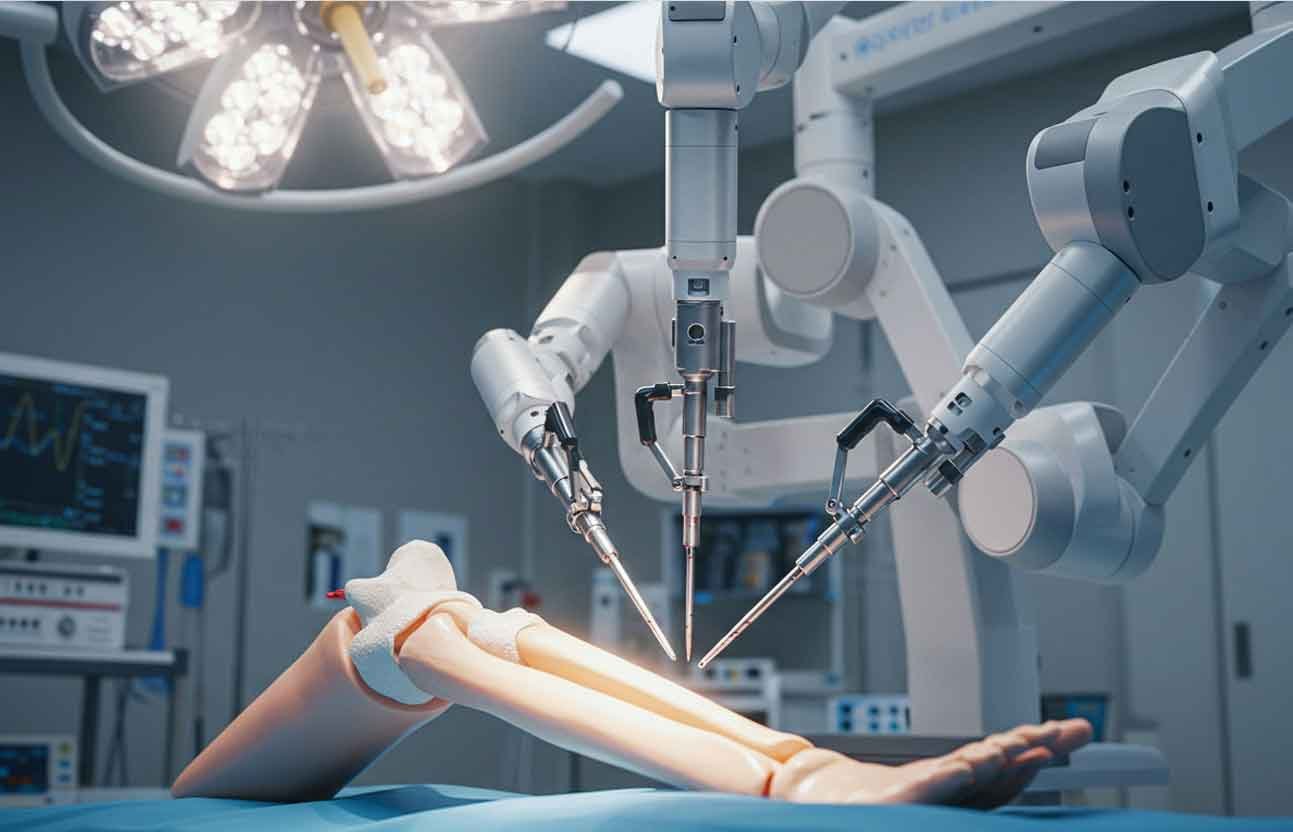
Advances in orthopedic technology have changed the way complex joint conditions are evaluated and treated. Among these developments, robot-assisted orthopedic surgery has become an important option for patients undergoing knee and other joint replacement procedures.
For patients suffering from severe knee arthritis, chronic joint pain, restricted movement or advanced joint damage, knee replacement may be recommended when medicines, physiotherapy, weight management and other non-surgical treatments no longer provide sufficient relief.
Kerala has developed into an important healthcare destination in India, with major cities such as Kochi and Calicut (Kozhikode) offering access to advanced orthopedic care. Patients looking for robotic knee replacement in Kochi, Kerala, or a robotic joint replacement hospital in Calicut, Kerala, can explore hospitals equipped with modern surgical technology and experienced orthopedic specialists.
However, choosing robotic surgery should not be based on technology alone. The patient's condition, surgeon's experience, hospital infrastructure, implant selection, rehabilitation programme and long-term follow-up all play important roles in determining the success of joint replacement.
This guide explains robotic orthopedic surgery, how robotic knee replacement works, who may benefit from it, what patients can expect during treatment, and what to consider when choosing a robotic orthopedic hospital in Kerala.
What Is Robotic Orthopedic Surgery?
Robotic orthopedic surgery is a technology-assisted approach used during certain orthopedic procedures, particularly joint replacement surgery.
Despite the term "robotic surgery," the robot does not independently perform the operation. The orthopedic surgeon remains responsible for the procedure and uses the robotic system as an advanced planning and surgical assistance tool.
Before surgery, detailed imaging and digital information about the patient's joint can be used to create a personalised surgical plan. During the operation, the robotic system can assist the surgeon with positioning, alignment and bone preparation according to the planned parameters.
The objective is to help the surgeon achieve accurate and reproducible placement of the components while preserving appropriate bone and soft-tissue structures whenever clinically possible.
Why Is Robotic Knee Replacement Becoming Popular?
Knee replacement surgery requires careful positioning of the implant components. Even relatively small differences in alignment can influence the mechanics of the artificial joint.
Robotic assistance can provide the surgeon with detailed information about the patient's anatomy and allow adjustments to the surgical plan during the procedure.
This level of planning can be particularly useful in patients with complex anatomy, previous deformities or significant changes in the alignment of the knee.
Robotic systems are also designed to provide the surgeon with real-time feedback during specific stages of surgery. This can help the surgical team execute the preoperative plan with greater precision.
However, robotic assistance does not eliminate the need for surgical expertise. The technology works as an additional tool under the control of the orthopedic surgeon.
How Does Robotic Knee Replacement Work?
The process begins with a detailed orthopedic assessment.
The surgeon evaluates the patient's symptoms, mobility, joint damage, medical history and previous treatments. Imaging studies are used to understand the condition of the knee and determine whether joint replacement is appropriate.
When robotic surgery is selected, the available robotic platform and imaging or mapping technology are used to create a surgical plan.
During the operation, the surgeon uses the robotic system to assist with the planned bone preparation and implant positioning. The system provides information that can help the surgeon maintain the desired alignment and positioning.
The surgeon remains in control throughout the procedure and can make clinical decisions based on the patient's anatomy and surgical findings.
After the implants are placed, the knee is assessed to ensure appropriate movement and stability before the procedure is completed.
Who May Need Robotic Knee Replacement?
Robotic knee replacement may be considered for patients with advanced knee joint damage who require knee replacement surgery.
One of the most common causes is advanced osteoarthritis, a degenerative condition in which the protective cartilage within the knee gradually wears away.
Patients may experience persistent knee pain, stiffness, difficulty walking, reduced mobility and difficulty performing everyday activities.
Some patients may also develop knee damage following previous injuries, inflammatory joint conditions or other structural problems.
The decision to undergo robotic knee replacement should be made after a detailed assessment by an experienced orthopedic surgeon. Robotic assistance is not automatically necessary or appropriate for every patient requiring knee replacement.
Robotic Knee Replacement for Severe Arthritis
Severe knee arthritis can significantly affect quality of life.
Initially, patients may manage symptoms with medications, physical therapy, activity modification, weight management, injections or other conservative treatments.
When these approaches no longer provide adequate relief and the joint has undergone significant structural damage, knee replacement may become an option.
Robotic-assisted knee replacement can help the surgeon plan implant positioning according to the patient's individual anatomy.
The goal remains the same as conventional knee replacement: to relieve pain, restore function and improve the patient's ability to perform everyday activities.
Robotic Knee Replacement in Kochi, Kerala
Kochi is one of Kerala's leading healthcare centres and an important destination for patients seeking advanced orthopedic treatment.
Patients searching for the best robotic knee replacement in Kochi, Kerala can find hospitals and orthopedic centres offering modern joint replacement services, depending on the technology and surgical expertise available at each facility.
Kochi also has strong international connectivity through Cochin International Airport, making the city accessible to patients travelling from other parts of India and overseas.
For patients coming from the GCC region, including the UAE, Saudi Arabia, Qatar, Oman, Kuwait and Bahrain, Kochi can be a convenient location for planned orthopedic treatment in Kerala.
However, patients should evaluate the surgeon, hospital, robotic platform, implant options and rehabilitation programme rather than choosing a facility based solely on the phrase "robotic surgery."
Choosing the Best Robotic Knee Replacement in Kochi
When searching online for the best robotic knee replacement in Kochi, patients may find many hospitals and clinics promoting advanced robotic technology.
Technology is an important consideration, but it should not be the only factor.
Patients should look at the orthopedic surgeon's qualifications and experience in knee replacement, the number and type of joint replacement procedures performed, hospital infrastructure, infection-control standards and availability of rehabilitation services.
It is also important to understand which robotic system is being used and how it is integrated into the surgeon's treatment approach.
The implant manufacturer and implant model may also influence treatment planning and cost.
A proper consultation should explain why robotic assistance is being recommended and whether it is genuinely beneficial for the patient's specific condition.
Robotic Joint Replacement Hospital in Calicut, Kerala
Calicut, also known as Kozhikode, is another major healthcare centre in northern Kerala.
Patients searching for a robotic joint replacement hospital in Calicut, Kerala can explore hospitals providing advanced orthopedic and joint replacement services.
Calicut has become an important healthcare destination for patients from northern Kerala as well as neighbouring regions.
Robotic-assisted joint replacement may be considered for selected patients requiring knee replacement and, depending on the available technology and clinical expertise, other joint procedures.
Patients should confirm with the hospital whether robotic assistance is available for their specific procedure and whether the orthopedic surgeon has appropriate experience using the technology.
Best Robotic Joint Replacement Hospital in Calicut: What Should Patients Look For?
Searching for the best robotic joint replacement hospital in Calicut, Kerala should involve more than comparing advertisements.
The quality of joint replacement depends on multiple components working together.
An experienced orthopedic surgeon should assess the patient's condition and determine whether joint replacement is required. The hospital should have appropriate operating-room facilities, imaging and diagnostic support, anesthesia services and infection-control protocols.
The rehabilitation programme is equally important because recovery does not end when the patient leaves the operating room.
Patients should therefore ask about physiotherapy, post-operative monitoring, follow-up appointments and support after returning home.
For international patients, remote follow-up arrangements can also be an important consideration.
Robotic Knee Replacement vs Conventional Knee Replacement
Both robotic-assisted and conventional knee replacement involve the same fundamental goal: replacing damaged joint surfaces with artificial components to relieve pain and restore function.
The major difference is the technology used to assist the surgeon with planning and execution.
In conventional knee replacement, surgeons use established surgical techniques and instruments to determine alignment and implant positioning.
In robotic-assisted surgery, digital planning and robotic guidance can provide additional information and assistance during selected stages of the procedure.
Robotic surgery does not necessarily mean that the patient will have a faster recovery or a better outcome in every situation. The benefits can vary depending on the patient, surgeon, surgical technique and robotic system used.
Therefore, the choice should be based on clinical suitability rather than technology alone.
Advantages of Robotic-Assisted Knee Replacement
One potential advantage of robotic-assisted surgery is personalised surgical planning.
The technology can help create a three-dimensional representation or digital surgical plan based on the patient's anatomy, depending on the system used.
Another potential benefit is assistance with implant positioning and alignment. Accurate positioning is an important component of successful knee replacement.
Robotic systems may also allow the surgeon to make intraoperative adjustments based on the patient's anatomy and surgical findings.
For selected patients, this technology can provide an additional level of precision and planning during joint replacement.
Nevertheless, patients should understand that robotic assistance is a surgical tool rather than a guarantee of a particular outcome.
Recovery After Robotic Knee Replacement
Recovery following robotic knee replacement varies between patients.
Early mobilisation is generally an important part of modern knee replacement rehabilitation. Depending on the patient's condition and the surgeon's protocol, physiotherapy may begin soon after surgery.
The rehabilitation programme focuses on gradually improving knee movement, strength, balance and walking ability.
Pain and swelling are expected during the early recovery period and generally improve progressively.
Patients may require walking support initially, followed by a gradual return to normal daily activities.
The timeline depends on factors such as age, overall health, muscle strength, preoperative mobility, surgical findings and adherence to rehabilitation.
Patients should follow their orthopedic surgeon's individual recovery instructions rather than comparing their recovery timeline directly with another patient.
Physiotherapy After Robotic Knee Replacement
Surgery is only one part of successful joint replacement treatment.
Physiotherapy plays an important role in helping patients regain movement and strength following knee replacement.
A structured rehabilitation programme may include range-of-motion exercises, muscle strengthening, walking training, balance exercises and functional activities.
The physiotherapist gradually modifies the programme according to the patient's progress.
For international patients returning to the UAE, Saudi Arabia, Qatar, Oman, Kuwait or Bahrain, it is useful to discuss the continuation of rehabilitation before leaving Kerala.
A suitable local physiotherapy programme can help maintain the progress achieved during the initial recovery period.
Cost of Robotic Knee Replacement in Kerala
The cost of robotic knee replacement in Kerala varies depending on several factors.
The hospital, surgeon, robotic technology, implant brand and model, type of knee replacement, patient's medical condition, length of hospital stay and rehabilitation requirements can all affect the final cost.
Additional investigations, medications, anesthesia and post-operative care may also influence the total treatment expense.
For international patients, the overall budget may also include accommodation, transportation and travel-related expenses.
Patients should request a detailed treatment estimate from the hospital that clearly explains what is included and what may be charged separately.
It is better to compare complete treatment plans rather than comparing only the advertised surgery price.
Is Robotic Knee Replacement Worth the Cost?
Whether robotic knee replacement is worth the additional cost depends on the individual patient.
The technology may offer advantages in surgical planning and implant positioning, but it does not automatically guarantee better results for every patient.
Patients should discuss the expected benefits, additional cost and suitability with their orthopedic surgeon.
A good decision should consider the patient's anatomy, degree of joint damage, surgeon's recommendation, available technology, expected outcomes and long-term treatment requirements.
Robotic Joint Replacement in Kerala for International Patients
Kerala has become an increasingly important destination for patients seeking healthcare from outside India.
International patients may consider Kerala for orthopedic procedures because the state offers a combination of specialist medical services, healthcare infrastructure and comparatively competitive treatment costs.
Kochi is particularly accessible because of its international airport, while Calicut provides an important healthcare hub for northern Kerala.
Patients travelling from the GCC region can plan their consultation, surgery, hospital stay and rehabilitation according to the recommendations of their orthopedic team.
Medical travel should always be planned around the patient's clinical requirements rather than treating surgery as a short-term tourism activity.
Robotic Orthopedic Surgery in Kerala for GCC Patients
Patients from the United Arab Emirates, Saudi Arabia, Qatar, Oman, Kuwait and Bahrain frequently explore international healthcare options for specialised procedures.
For GCC patients considering orthopedic treatment in India, Kerala can offer access to hospitals and specialists in major cities such as Kochi and Calicut.
Language assistance, appointment coordination, airport transfers, accommodation and post-treatment communication can also be important components of the medical travel experience.
Before travelling, patients should share their medical reports, imaging and previous treatment information with the hospital wherever possible.
This allows the orthopedic team to review the case and determine whether the patient may be suitable for robotic joint replacement.
How to Select a Robotic Orthopedic Hospital in Kerala
Choosing a hospital is one of the most important decisions in the treatment process.
Patients should first verify the qualifications and experience of the orthopedic surgeon. They should understand how frequently the surgeon performs knee and joint replacement procedures and how experienced they are with robotic-assisted surgery.
The hospital's infrastructure is another important consideration. This includes operating theatres, anesthesia facilities, diagnostic services, infection-control standards and post-operative monitoring.
Patients should also ask about the robotic platform being used, implant options and rehabilitation services.
For international patients, the availability of follow-up support after returning home should also be considered.
A comprehensive treatment plan should provide clear information about the procedure, expected recovery, potential risks, estimated cost and follow-up schedule.
Why Consider Medinglo for Robotic Orthopedic Treatment in Kerala?
For international patients, arranging medical treatment in another country can involve several steps, from identifying suitable treatment options to coordinating appointments and planning travel.
Medinglo can assist patients in exploring robotic orthopedic surgery in Kerala, including options for robotic knee and joint replacement in Kochi and Calicut.
Patients can share their medical records and treatment requirements for an initial assessment and explore suitable healthcare options based on their individual needs.
The final diagnosis, treatment recommendation and decision regarding robotic surgery should always be made by a qualified orthopedic specialist following an appropriate medical evaluation.
Frequently Asked Questions About Robotic Orthopedic Surgery in Kerala
What is robotic knee replacement?
Robotic knee replacement is a knee replacement procedure in which robotic-assisted technology helps the orthopedic surgeon with surgical planning, alignment and selected stages of the procedure. The surgeon remains in control of the operation.
Is robotic knee replacement better than conventional surgery?
Robotic assistance may provide additional precision and personalised planning in selected cases, but it is not automatically better for every patient. The appropriate approach depends on the patient's condition and the surgeon's assessment.
How much does robotic knee replacement cost in Kerala?
There is no single fixed price. Costs depend on the hospital, surgeon, robotic system, implant, patient's condition, hospital stay and rehabilitation. Patients should obtain an individualised quotation from the hospital.
Where can I get robotic knee replacement in Kochi?
Kochi has several healthcare facilities providing advanced orthopedic services. Patients should evaluate individual hospitals and surgeons based on qualifications, experience, robotic technology, implant options, safety standards and rehabilitation services.
Is robotic joint replacement available in Calicut, Kerala?
Robotic-assisted joint replacement services may be available at selected hospitals in Calicut. Patients should confirm the availability of the specific robotic procedure and the surgeon's experience before booking treatment.
How long does recovery take after robotic knee replacement?
Recovery varies from patient to patient. Early rehabilitation generally focuses on movement, strength and walking, while continued physiotherapy helps patients progressively return to normal activities.
Can GCC patients travel to Kerala for robotic knee replacement?
Yes. Patients from the UAE, Saudi Arabia, Qatar, Oman, Kuwait and Bahrain can explore orthopedic treatment options in Kerala. Medical evaluation and travel planning should be completed before travelling.
Conclusion
Robotic orthopedic surgery in Kerala represents the combination of advanced surgical technology and specialist orthopedic expertise.
For patients requiring knee replacement, robotic-assisted surgery can provide additional support for personalised surgical planning, alignment and implant positioning. However, the technology should be viewed as a tool that assists the orthopedic surgeon rather than a guarantee of success.
Kochi and Calicut are two important healthcare centres in Kerala where patients can explore advanced orthopedic treatment. Those searching for the best robotic knee replacement in Kochi, Kerala or the best robotic joint replacement hospital in Calicut, Kerala should compare the surgeon's experience, hospital infrastructure, robotic technology, implant quality, safety standards and rehabilitation programme.
For patients from the GCC region, Kerala can also offer the convenience of international connectivity, established healthcare infrastructure and a potentially cost-effective treatment environment.
Ultimately, the right treatment is the one that is medically appropriate for the individual patient. A detailed consultation with a qualified orthopedic surgeon is essential before deciding whether robotic knee or joint replacement is the right option.
Medical Disclaimer: This article is intended for general informational purposes only and does not constitute medical advice. Robotic surgery may not be appropriate for every patient, and treatment options, risks, recovery times, costs and outcomes vary between individuals. Patients should consult a qualified orthopedic surgeon for personalised medical advice.