



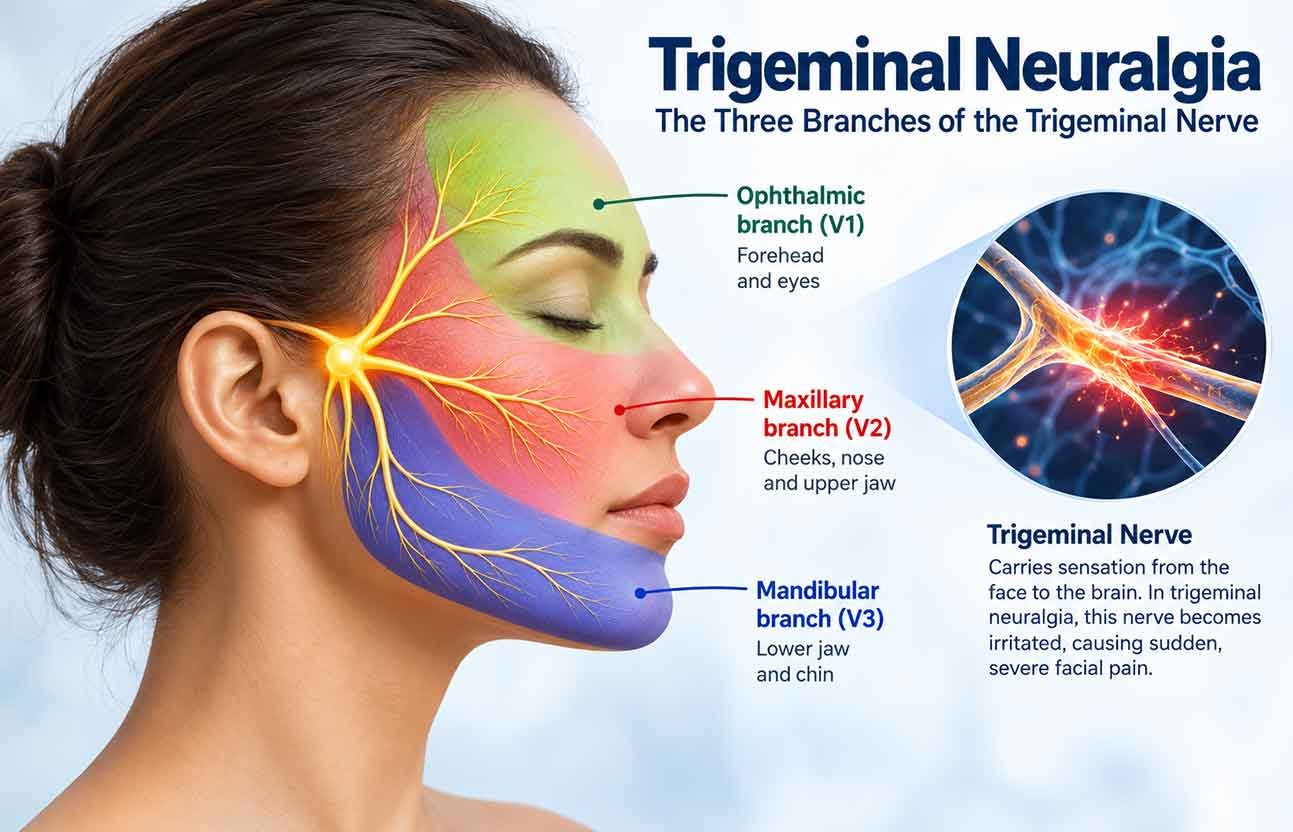
Trigeminal neuralgia (TN) is a neurological condition that causes sudden, severe facial pain, often described as an electric shock, stabbing sensation or sharp shooting pain. The pain typically affects one side of the face and may involve the jaw, cheek, teeth, gums or forehead. Even simple activities such as eating, speaking, brushing the teeth or washing the face can trigger an attack.
For patients seeking trigeminal neuralgia treatment in Kerala, India, understanding the cause of the pain and obtaining an accurate diagnosis are important first steps. Treatment may include prescription medicines, specialist pain management and, for selected patients, neurosurgical procedures designed to reduce pressure on the trigeminal nerve or interrupt pain signals.
Kerala offers access to neurological assessment, diagnostic imaging and specialist treatment services. The appropriate treatment depends on the severity of symptoms, the underlying cause, the patient's general health and their response to previous therapies.
What Is Trigeminal Neuralgia?
Trigeminal neuralgia is a chronic nerve pain disorder involving the trigeminal nerve, the fifth cranial nerve. This nerve carries sensory information from the face to the brain and has three main branches: the ophthalmic branch, which supplies sensation to the forehead and around the eyes; the maxillary branch, which supplies the middle part of the face; and the mandibular branch, which supplies the lower face and parts of the jaw.
When this nerve becomes irritated, compressed or damaged, it can generate sudden episodes of intense pain. The attacks often last from a few seconds to approximately two minutes, although they may recur many times throughout the day. Some patients experience periods without pain, while others develop more persistent discomfort between attacks.
Trigeminal neuralgia is different from ordinary facial pain, toothache or a typical headache. Because the pain can be felt in the teeth and jaw, some patients initially seek dental treatment before the underlying nerve condition is recognised.
What Causes Trigeminal Neuralgia?
One of the most common causes of classical trigeminal neuralgia is compression of the trigeminal nerve by a nearby blood vessel, usually where the nerve enters the brainstem. Continued pressure may affect the nerve's protective covering and contribute to abnormal transmission of pain signals.
However, not every case is caused by vascular compression. Secondary trigeminal neuralgia may occur because of an underlying condition such as multiple sclerosis, a tumour or another structural abnormality affecting the nerve. In some patients, no clear cause can be identified, and the condition is described as idiopathic trigeminal neuralgia.
Identifying the possible cause is important because it can influence the choice of treatment. For example, a patient with a blood vessel compressing the nerve may be evaluated for a procedure that relieves that pressure, while someone with an underlying neurological condition may need treatment directed at that condition as well.
Common Symptoms of Trigeminal Neuralgia
The most characteristic symptom is sudden, intense facial pain that may feel like an electric shock or sharp stabbing sensation. The pain commonly affects one side of the face, although the exact location depends on which branches of the trigeminal nerve are involved.
Patients may experience pain in the upper or lower jaw, cheek, teeth, gums or forehead. Attacks can begin without warning and stop just as suddenly. In some cases, a dull ache, burning sensation or continuous discomfort may occur between the more intense episodes.
The frequency of attacks varies considerably. Some patients experience occasional episodes, while others may have repeated attacks throughout the day. Pain-free periods can last for weeks, months or longer, although symptoms may return.
The severity of the pain can interfere with eating, drinking, speaking, sleeping and everyday activities. Some people begin avoiding activities that they associate with an attack, which can affect nutrition, emotional wellbeing and social interaction.
What Triggers Trigeminal Neuralgia Pain?
One of the most difficult aspects of trigeminal neuralgia is that ordinary, gentle movements can trigger severe pain. Common triggers include chewing, talking, brushing the teeth, washing the face, shaving, smiling and touching a sensitive area of the skin.
Cold air, wind, swallowing and certain head movements may also trigger attacks. In some patients, the pain occurs spontaneously without an identifiable trigger.
Recognising personal triggers can help patients manage daily activities more comfortably, but avoiding every possible trigger is not a substitute for medical treatment. If pain makes eating or drinking difficult, medical advice is particularly important to prevent dehydration and inadequate nutrition.
Types of Trigeminal Neuralgia
Trigeminal neuralgia is generally classified according to its suspected cause.
Classical trigeminal neuralgia is associated with vascular compression of the trigeminal nerve, often accompanied by changes to the nerve at the point of contact.
Secondary trigeminal neuralgia occurs when another condition, such as multiple sclerosis or a tumour, affects the nerve or its surrounding structures.
Idiopathic trigeminal neuralgia is diagnosed when the symptoms meet the clinical criteria for the condition but investigations do not identify a definite underlying cause.
These categories help specialists determine which investigations may be appropriate and which treatments deserve consideration.
How Is Trigeminal Neuralgia Diagnosed?
There is no single test that confirms every case of trigeminal neuralgia. Diagnosis usually begins with a detailed medical history and neurological examination. The specialist will ask about the location, intensity, duration and frequency of the pain, as well as activities that trigger the attacks.
A dental assessment may be necessary because tooth decay, dental infection, cracked teeth and jaw disorders can cause similar symptoms. Other possible causes, including migraine-related facial pain, cluster headache and nerve pain associated with shingles, may also need to be considered.
Magnetic resonance imaging (MRI) is often used to investigate possible causes of facial pain. Depending on the imaging technique, it may help identify a blood vessel compressing the trigeminal nerve, a tumour, multiple sclerosis-related changes or another structural abnormality.
The need for additional tests depends on the patient's symptoms, examination findings and medical history. An accurate diagnosis is essential before selecting a long-term treatment plan.
Trigeminal Neuralgia Treatment in Kerala
Treatment for trigeminal neuralgia aims to reduce pain attacks, improve daily functioning and minimise medication side effects. Many patients begin with prescription medication, while those who do not obtain adequate relief may be assessed for other medical or surgical options.
The treatment plan depends on whether the condition is classical, secondary or idiopathic, how frequently the attacks occur and how well the patient responds to previous treatment.
Patients seeking trigeminal neuralgia treatment in Kerala may benefit from a coordinated assessment involving a neurologist, pain specialist or neurosurgeon, depending on their symptoms and treatment history.
Medication for Trigeminal Neuralgia
Medication is generally the initial treatment for trigeminal neuralgia. Carbamazepine is a commonly recommended first-line medicine because it can reduce the abnormal nerve signalling responsible for pain attacks. Oxcarbazepine may be considered as an alternative in appropriate cases.
If initial medication is ineffective or causes troublesome side effects, a specialist may consider other medicines, such as lamotrigine, baclofen, gabapentin or pregabalin, depending on the individual circumstances. The evidence and suitability of these alternatives differ, and they should not be substituted without medical guidance.
These medicines require careful monitoring. Possible side effects can include dizziness, drowsiness, nausea and problems with coordination. Some medications may also require blood tests or additional monitoring.
Ordinary painkillers often provide little relief from the characteristic attacks of trigeminal neuralgia. Patients should not increase doses, combine medicines or discontinue prescribed treatment suddenly without consulting their clinician.
When Is Surgery Considered for Trigeminal Neuralgia?
Surgery or another specialist procedure may be considered when medication does not control the pain adequately, causes significant side effects or becomes unsuitable for long-term management.
The choice depends on the cause of the condition, the patient's general health, MRI findings, age, previous treatments and personal preferences. Some procedures aim to relieve pressure on the nerve, while others interrupt the transmission of pain signals.
A specialist should explain the expected benefits, possible complications, likelihood of recurrence and recovery requirements before a patient makes a decision.
Microvascular Decompression Surgery
Microvascular decompression (MVD) is a surgical procedure designed to relieve pressure on the trigeminal nerve when a nearby blood vessel is compressing it.
The operation is performed under general anaesthesia. Through a carefully planned opening in the skull behind the ear, the neurosurgeon reaches the area where the trigeminal nerve enters the brainstem. If an offending blood vessel is identified, the surgeon separates it from the nerve and places a protective material between them to reduce direct contact.
One important feature of MVD is that it aims to relieve the compression without deliberately damaging the trigeminal nerve. For appropriately selected patients with classical trigeminal neuralgia, it can provide substantial and sometimes long-lasting pain relief.
However, MVD is a major operation. Potential complications include hearing changes, facial numbness, cerebrospinal fluid leakage, infection, stroke and other risks associated with surgery and general anaesthesia. Pain may also recur after treatment. A neurosurgical evaluation is needed to determine whether the potential benefits outweigh the risks for an individual patient.
Other Procedures for Trigeminal Neuralgia
Not every patient is suitable for microvascular decompression. Other procedures may be considered according to the underlying cause, general health and treatment goals.
Stereotactic radiosurgery uses precisely focused radiation directed at the trigeminal nerve. It does not require an open surgical incision, but pain relief may take several weeks or months to develop. Facial numbness and recurrence of pain are possible.
Radiofrequency treatment uses controlled heat to interrupt pain transmission through selected nerve fibres. It may provide meaningful relief, although facial numbness or altered sensation can occur.
Balloon compression involves placing and briefly inflating a small balloon near the trigeminal ganglion to affect pain signalling. Another option, glycerol rhizolysis, involves injecting glycerol into a targeted area around the nerve to reduce pain transmission.
These procedures differ in their effectiveness, recovery requirements, risks and likelihood of recurrent symptoms. Some intentionally affect nerve function and can cause facial numbness or other sensory changes. The most appropriate option should be selected after a detailed specialist assessment.
Recovery After Trigeminal Neuralgia Treatment
Recovery depends on the treatment received. Patients who begin medication may need gradual dose adjustments and follow-up appointments to evaluate pain control and side effects.
After a minimally invasive procedure, observation and recovery may be relatively short, although the exact period depends on the technique and the patient's condition. Recovery after microvascular decompression generally requires more time because it involves surgery near the brainstem.
Follow-up care helps assess whether the pain has improved, whether medication can be adjusted and whether any complications have developed. Patients should follow the treating team's instructions regarding activity, wound care, medication and follow-up appointments.
Pain relief may be immediate after some procedures or develop gradually after others. No procedure can guarantee permanent relief, and some patients may need additional treatment if symptoms return.
Living With Trigeminal Neuralgia
Living with repeated facial pain can affect eating, personal care, work, sleep and emotional wellbeing. Managing the condition involves more than controlling individual pain attacks.
Patients may find it helpful to identify triggers, choose foods that are easier to chew during painful periods and maintain adequate fluid intake. Gentle oral hygiene and practical adjustments to daily activities may also help reduce discomfort.
Persistent pain can lead to anxiety, social withdrawal and low mood. Discussing these difficulties with a healthcare professional is an important part of comprehensive care. Psychological support may help patients cope with the emotional burden of a chronic pain condition.
These measures complement medical treatment rather than replacing it.
Trigeminal Neuralgia Treatment in Kochi, Kerala
Kochi is one of Kerala's major healthcare centres and can be considered by patients seeking neurological evaluation and specialist care for facial nerve pain.
A typical treatment pathway may involve a neurological consultation, review of previous dental and medical assessments, MRI when indicated, medication management and referral for a neurosurgical opinion if symptoms remain difficult to control.
The appropriate pathway depends on the patient's diagnosis and previous response to treatment. Patients should ask about the available diagnostic facilities, the experience of the treating specialist with trigeminal neuralgia and the follow-up arrangements after treatment.
Trigeminal Neuralgia Treatment for International Patients
Patients travelling to Kerala from the GCC or other countries may benefit from arranging a preliminary medical review before travelling. Previous MRI scans, dental reports, medication records and details of earlier procedures can help the specialist understand the case and determine which further investigations may be required.
International patients should also consider the length of stay needed for consultation, investigations, treatment and recovery. Those undergoing surgery may require a longer stay and postoperative assessment before being cleared to travel.
Coordinating appointments, accommodation, transportation and communication with the treating team can make the treatment journey more manageable. Follow-up arrangements should also be discussed before returning home.
Cost of Trigeminal Neuralgia Treatment in Kerala
The cost of trigeminal neuralgia treatment in Kerala varies according to the patient's condition and the treatment recommended.
Medication-based management may involve consultation fees, diagnostic investigations, prescription medicines and follow-up visits. If a procedure or surgery is required, the overall expense may also include specialist fees, MRI or other imaging, anaesthesia, hospitalisation, surgical equipment, postoperative care and rehabilitation where needed.
The cost of microvascular decompression may differ considerably from that of stereotactic radiosurgery or percutaneous procedures because the techniques, facilities and recovery requirements are different.
International patients should request an individualised estimate after medical records have been reviewed. The estimate should clarify which investigations, procedure-related services, hospital stay and follow-up arrangements are included.
Frequently Asked Questions
Is trigeminal neuralgia curable?
Trigeminal neuralgia can often be managed effectively, and some patients experience prolonged pain relief after treatment. Microvascular decompression may provide long-lasting relief for appropriately selected patients with vascular compression. However, pain can recur, and no treatment guarantees a permanent cure for everyone.
What is the first-line treatment for trigeminal neuralgia?
Carbamazepine is a commonly recommended initial medication. Oxcarbazepine or other specialist-selected treatments may be considered when the first medicine is ineffective, unsuitable or poorly tolerated. Medication should be prescribed and monitored by a qualified clinician.
Can trigeminal neuralgia be treated without surgery?
Yes. Many patients begin with medication, which may control their symptoms without surgery. Procedures are generally considered when medication does not provide sufficient relief or causes significant side effects.
Is microvascular decompression surgery safe?
MVD can be effective for selected patients, but it is a major neurosurgical procedure with potential complications. A specialist should assess the cause of the pain, the patient's general health and the likely benefits and risks before recommending surgery.
How long does recovery take after trigeminal neuralgia surgery?
Recovery varies according to the procedure and the patient's condition. Less invasive procedures may involve shorter observation periods, while recovery after microvascular decompression usually takes longer. The treating team can provide an individual recovery plan.
Can trigeminal neuralgia be mistaken for a tooth problem?
Yes. Because the pain can affect the teeth, gums and jaw, some patients initially seek dental treatment. When dental causes do not explain recurrent, electric-shock-like facial pain, further medical assessment may be needed.
Is MRI necessary for trigeminal neuralgia?
MRI is commonly used to investigate possible causes, including vascular compression, tumours and changes associated with multiple sclerosis. The specialist determines the appropriate imaging based on the symptoms and clinical findings.
Is trigeminal neuralgia treatment available in Kerala for international patients?
Patients from other countries can seek assessment and treatment in Kerala. The appropriate option depends on the diagnosis, available specialist services and the patient's medical history. Sending previous reports before travel can help with initial planning.
Conclusion
Trigeminal neuralgia is a complex nerve pain condition that can significantly affect daily life, but appropriate diagnosis and treatment can help many patients manage their symptoms.
For patients considering trigeminal neuralgia treatment in Kerala, India, care may include prescription medication, specialist pain management, microvascular decompression or other procedures for appropriately selected cases. The right approach depends on the cause of the pain, its severity, the patient's general health and the response to previous treatment.
A detailed neurological assessment, appropriate imaging and an informed discussion of treatment options are essential steps towards developing an individual care plan. For international patients, advance medical record review and clear arrangements for treatment, recovery and follow-up can make the process easier to navigate.
Medical Disclaimer: This article is intended for general educational purposes and does not replace professional medical advice, diagnosis or treatment. Trigeminal neuralgia requires individual assessment by a qualified healthcare professional. Patients should not start, change or stop prescription medication without medical guidance.